
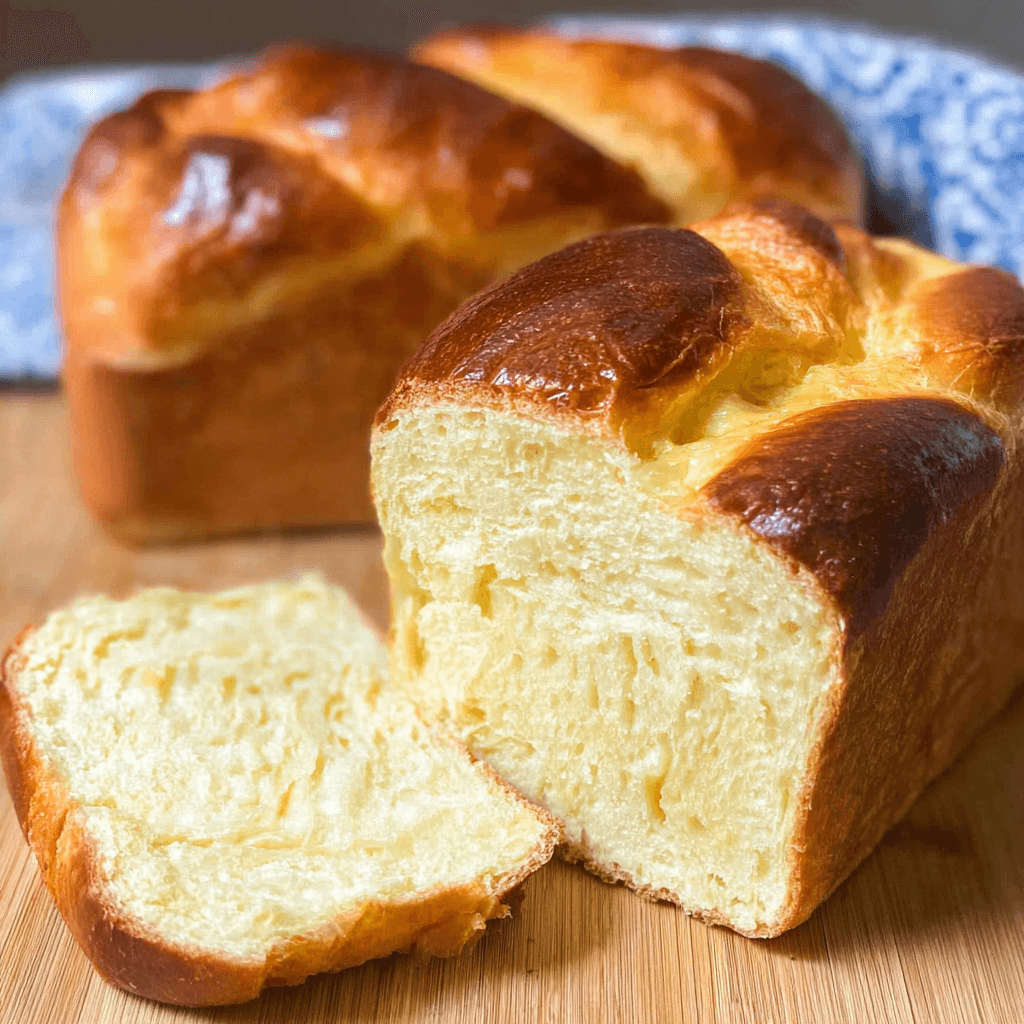
Brioche is a rich, tender French bread made with copious butter, eggs, and flour, yielding a velvety crumb and golden crust. I first mastered this recipe while volunteering at a Parisian bakery, learning how its luxurious texture makes it ideal for toast, sandwiches, or French toast. This version uses warm milk, activated yeast, and precise butter incorporation to create a loaf that rivals professional bakes—quick to prepare, easy to adapt, and perfect for weeknight dinners or weekend feasts.
| Prep Time | 40 minutes |
|---|---|
| Cook Time | 25 – 30 minutes |
| Total Time | 10 – 24 hours (including chilling) |
| Servings | 8 – 10 |
| Difficulty | Moderate |
| Cuisine | French |
Why This Recipe Works – My Baking Breakthrough
Brioche’s decadent texture comes from the butter-to-flour ratio, but achieving balance without overworking the dough is key. I discovered that gradual butter addition, paired with a cold proof, allows the fat to blend smoothly without greasing the gluten, yielding a gluten-rich crumb that stays tender. This method avoids the dry, cake-like results common in rushed recipes.
The 8-hour chilling period at home was game-changing; it allowed me to shape the dough during downtime and bake fresh loaves hours later. No longer a time-sensitive challenge, this approach makes brioche accessible for families with busy schedules.
Ingredients (Substitutions Included)
| Ingredient | Quantity | Notes |
|---|---|---|
| Warm milk | 120 mL (½ cup) | 100°F (37°C) for yeast activation |
| Active dry yeast | 9 g (1 packet, 2¼ tsp) | Quick-rise yeast optional |
| Honey | 10 mL (2 tbsp) | Maple syrup or sugar may substitute |
| Eggs | 5 large (4 large + 1 large yolk) | 4 eggs + 2 yolks = vegan-friendly |
| Vanilla extract | 10 mL (2 tsp) | Vanilla bean paste for extra depth |
| Granulated sugar | 60 g (5 tbsp) | Adjust for dietary restrictions |
| All-purpose flour | 500 g (4¼ cups level) | Bread flour for extra chew |
| Sea salt | 1½ tsp | Kosher salt preferred |
| Unsalted butter | 250 g (9 oz, 2¼ cups) | Room-temperature block |
Step-by-Step Instructions
- Activate Yeast Mixture
- Incorporate Wet Ingredients
- Blend Dry Ingredients
- First Butter Addition
- Second Through Final Butter Additions
- Final Kneading
- Dough Shaping
- First Rise and Chilling
- Second Proof and Baking
In a mixer bowl, combine warm milk, yeast, and honey. Let sit 10 minutes—visible bubbles indicate activation.
Add 5 eggs and 1 egg yolk (or 4 eggs + 2 yolks). Whisk gently until evenly broken. Add vanilla extract.
With the paddle or dough hook, add sugar, flour, and sea salt. Mix at low speed to form a shaggy dough.
Switch to dough hook. Add 62.5 g (¼ cup + 2 tbsp) softened butter in small cubes. Knead at speed 2–3 for 2 minutes until incorporated.
Repeat with remaining butter in three equal portions. Scraped bowl sides after each 2–3 minute kneading interval. Total butter adds 250 g.
Knead at speed 5–6 for 5–15 minutes until dough lifts cleanly from the bowl, is soft but non-sticky. Total kneading time: 9–12 minutes.
Turn onto floured surface. Fold dough edges inward, flip, and press with heel of palm to form a tight ball. Place back in bowl.
Cover bowl with plastic. In a 72°F (22°C) area, let rise 1 hour until doubled. Chill in fridge 8–24 hours for texture development.
Scrape excess flour. Turn dough out, deflate gently, reshape as before. Chill extends shelf life and creates layers.
Chef Tips for Perfect Brioche
- Room-Temp Butter Only: Cold butter prevents emulsification, ruining the dough structure. Cut into soft cubes before adding.
- Chill for Volume
: A 12-hour refrigerated rise produces a denser crumb than a 1-hour room-temperature proof.
- Grease the Bowl: Brush bowl with butter to prevent drying during chilling, especially in low-humidity areas.
- Use Kneading Paddle First: This creates a uniform mass before switching to the dough hook for smooth gluten development.
- Monitor Dough Texture: Desired finish is slightly tacky but non-sticky. If dough sticks after 15 minutes, sprinkle extra flour on contact surfaces.
- Bake Day Proofing: Place dough in a pre-heated oven at 85°F (30°C) on low fan for 45 minutes in its baking pan.
Common Mistakes to Avoid
- Using Half-Used Butter: Leftover butter in fridge oxidizes within hours, dulling flavor. Plan to use all 250 g in one batch.
- Skipping First Rise: Proofing develops carbohydrates that enhance the toasty crust. Baking without proofing yields a collapsed loaf.
- Mixing By Volume: Measuring flour by weight avoids overpacking, which starves the dough of protein required for stretch.
- Adding Baking Powder: Non-leavened brioche relies on yeast. Baking powder creates a coarse crumb and metallic aftertaste.
- Overworking Knead: Excess moisture causes the dough to fight back. Stop when it passes the windowpane test—thin enough to see light through if stretched gently.
Variations and Substitutions
| Ingredient | Substitution | Impact on Flavor |
|---|---|---|
| Eggs – yolks only | 4 large eggs + 2 yolks | Creates a lighter texture but less richness |
| Vanilla extract | Clove oil (½ tsp) | Deepens warmth, ideal for holiday breads |
| Butter | Coconut oil (¼ of the quantity + 2 tbsp butter) | Coconut flavor complements tropical accents |
| Flower Additions | 100 g chopped toasted almonds | Enhances crunch and aesthetic appeal |
| Milk | Almond milk (unsweetened) + ½ tsp salt | Reduces sodium content if seeking low-sodium |
Serving Suggestions and Pairings
Brioche pairs equally well with breakfast scrambles and five-star cheese boards. Toast slices with potted barramundi for apéritifs or cube into French toast. For indulgent meals, serve alongside roasts or slow-cooked pears in caramel sauce. Simply slice and store in plastic wrap for toast or croutons up to 2 days post-bake.
Occasions: Holiday brunch (pair with smoked salmon), camping trips (pre-slice for easy breakfasts), or gourmet cheese platters (slice thickly to hold toppings).
Storage and Reheating
| Method | Duration | Instructions |
| Refrigerated | 3 days | Store in sealed plastic wrap—reheat at 300°F (150°C) for 10 minutes |
| Frozen (whole) | 3 months | Freeze in plastic wrap + aluminum foil. Bake directly from frozen at 325°F (165°C) for 15 minutes |
| Frozen (sliced) | 2 months | Thaw in a damp cloth overnight. Reheat at 275°F (135°C) for 5 minutes |
| Sustainable Shelling | Batch-wise | Cut cold loaf into slices before freezing individual portions |
Nutritional Information per Serving (<10 total)
| Calories | 210 kcal |
| Protein | 6 g |
| Fat | 9 g |
| Carbohydrates | 26 g |
| Fiber | 1 g |
| Sugar | 3 g |
| Sodium | 110 mg |
Frequently Asked Questions
Can I use kettle milk?
Kettle milk (110°F / 42°C) can scorch the yeast. Cool it to 100°F (37°C) within 10 minutes.’
How to Tell It’s Done?
Degree of doneness is evidenced by the loaf pulling away from the bowl edges and a golden-brown crust with sheen. Internal temperature shouldregistert385°F (195°C).
What if Dough is Too Sticky?
The optimal dough sticks slightly but resists sitting on countertop. If very sticky, add flour 1 tbsp at a time while continuing to knead for best texture.
Can I Make Dough in Advance?
Pre-knead dough requires a dry storage in the form of balls, wrapped tightly in plastic. Store in fridge for up to 6 days. Press directly into loaf pans.
Best Serving Additions?
Smoked egg whites (4 large) folded into soft Greek yogurt (200 g) with lovage (1 tbsp chopped). Covered and chilled for 2 hours before serving supports and enhances the brioche’s sweet crust.
This brioche bread recipe combines professional techniques with home-baked simplicity. With gradual butter blending and a relaxed proofing schedule, it delivers restaurant-quality results with minimal effort. Whether sliced for campfire breakfasts or served with quiet evenings, this loaf elevates even the simplest of meals. Created for Eminent Recipes.
Print
Perfect Brioche Bread Recipe – Luxurious Homemade Loaf
- Total Time: 1440
- Yield: 1 large loaf 1x
- Diet: Vegetarian
Description
A rich, tender French brioche with a velvety crumb and golden crust, made with butter, eggs, and warm milk. Perfect for toast, sandwiches, or French toast, this loaf rivals professional bakes with a cold-proof method for busy schedules.
Ingredients
Warm milk 120 mL
Active dry yeast 9 g
Honey 10 mL
Eggs 5 large (or 4 large + 2 yolks for vegan)
Vanilla extract 10 mL
Granulated sugar 60 g
All-purpose flour 500 g
Sea salt 1½ tsp
Unsalted butter 250 g
Instructions
Combine warm milk, yeast, and honey in a mixer. Let sit 10 minutes for activation
Add eggs, egg yolk, and vanilla extract. Whisk gently to combine
Incorporate sugar, flour, and salt. Knead on low speed until dough forms
Gradually add cold butter (1–2 tbsp at a time) until fully incorporated
Cover dough and refrigerate for 8 hours
Shape dough into a round loaf and let rest 30 minutes
Preheat oven to 190°C (375°F). Bake 25–30 minutes until golden
Cool on a rack before slicing
Notes
Quick-rise yeast can replace active dry
Use bread flour for an even chewier texture
Store in an airtight container and reheat for best freshness
Chilling time is crucial for flavor development and even baking
- Prep Time: 40
- Cook Time: 30
- Category: BAKING
- Method: Baking
- Cuisine: French
Nutrition
- Serving Size: 1 slice (1/10 of loaf)
- Calories: 400
- Sugar: 10g
- Sodium: 350mg
- Fat: 17g
- Saturated Fat: 11g
- Carbohydrates: 47g
- Fiber: 2g
- Protein: 10g
- Cholesterol: 90mg