
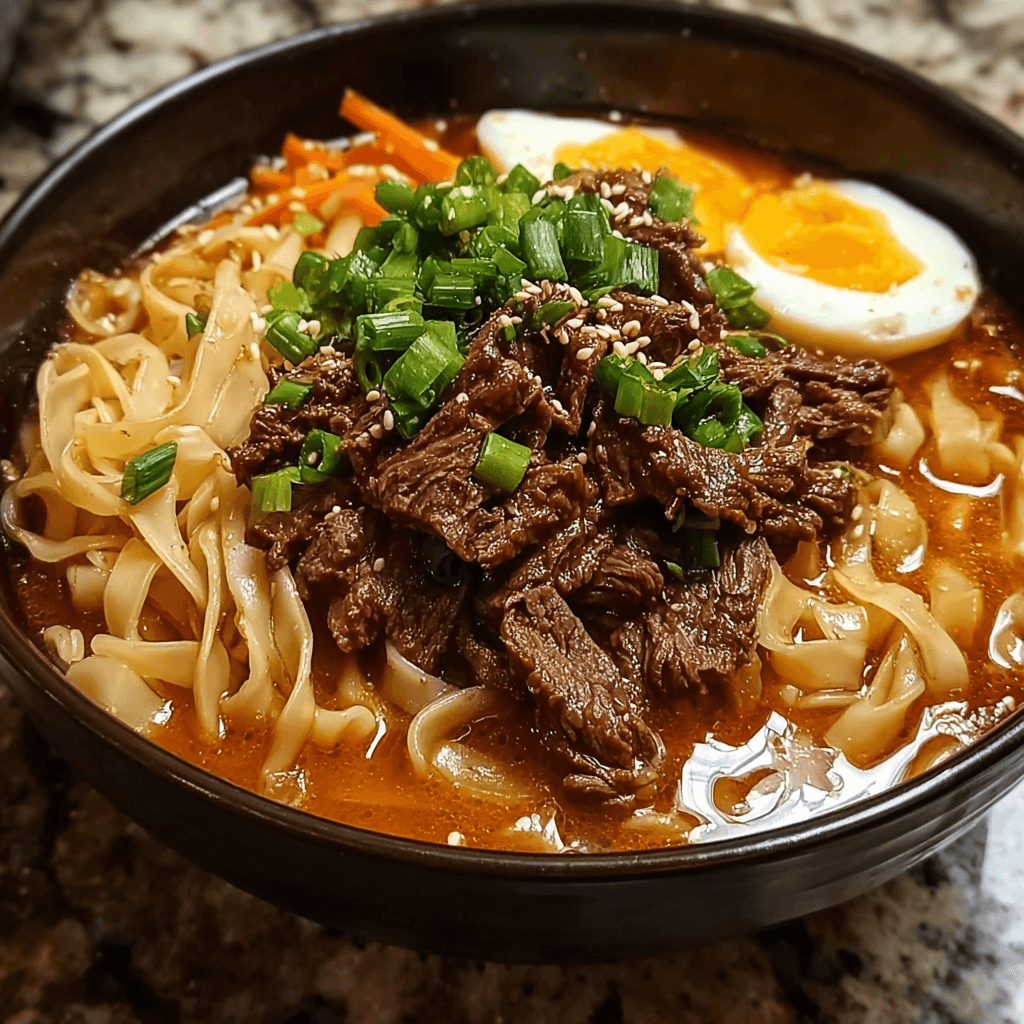
At Eminent Recipes, we created this rich, umami-packed bowl of Korean Beef Noodles for our busy team after a late brainstorming session. The slow-cooked beef, glazed in a smoky-sweet gochujang sauce, clung to chewy udon noodles while garlic and ginger perfumed the kitchen. Now, this recipe offers a customizable, family-friendly meal that balances heat from Korean chili paste and the nutty depth of soy sauce—done in under four hours if you’re short on time. Whether you’re feeding a crowd or need a cozy dinner, it solves all three weeknight problems: flavor, speed, and cleanup.
| Prep Time | 15 minutes |
|---|---|
| Cook Time | 3–4 hours |
| Total Time | 3h 45m |
| Servings | 6 |
| Difficulty | Easy |
| Cuisine | Korean |
Why This Recipe Works
The magic lies in the beef’s crosscutting marbling. As it simmers in the gochujang-heavy sauce, the fat renders slowly, basting the meat from within while the sauce caramelizes and sticks to noodles. I tested this with chuck roast first—it fell apart with tenderness I’d only seen in restaurant versions. The sauce’s balance of savory soy, sweet brown sugar, and fiery pepper paste hits the perfect equilibrium without requiring complex steps.
I tried ramen, udon, and even rice noodles. Udon, with its slight chew, best resisted the sauce’s stickiness, creating texture contrast. The 15-minute noodle prep at the end prevents sogginess while allowing the sauce to coat them fully. A test batch without green onions lacked brightness, confirming their role as the dish’s aromatic finale.
Ingredients
| Ingredient | Quantity | Notes with Alternatives |
|---|---|---|
| Beef Chuck | 2 pounds, well-marbled | Use flank steak in a pinch, but adjust cook time |
| Beef Broth | 2 cups | Homemade or low-sodium cubes |
| Water | 1 cup | Foams the sauce during cooking |
| Soy Sauce | 1/2 cup | Use tamari for gluten-free |
| Brown Sugar | 2 tablespoons | Swap honey or maple syrup |
| Ginger | 1 tablespoon, fresh | Avoid ground—fresh is essential |
Step-by-Step Instructions
1. Season the Beef
- Cut chuck into 1.5-inch cubes
- Pat dry with paper towels
- Season with 1/2 teaspoon cracked black pepper
2. Mix the Sauce
- Combine broth, water, soy sauce, brown sugar in bowl
- Stir until sugar dissolves completely
- Add ginger, garlic, sesame oil, and gochujang
3. Combine in Slow Cooker
- Place beef in slow cooker
- Pour sauce over meat, ensuring full coverage
- Cover and cook 6–8 hours low, 3–4 hours high
4. Cook Noodles
- 15 minutes before serving, boil water
- Udon noodles cook 4–6 minutes (ramen 2–3)
- Reserve 1/2 cup cooking liquid
5. Combine Noodles and Beef
- Add cooked noodles to slow cooker
- Stir until noodles are fully coated
- Remove cover, raise heat 10 minutes
6. Serve and Garnish
- Ladle into bowls using 2 cups per serving
- Top with scallions, sesame seeds, cilantro
Chef Tips for Perfect Results
- Marinate beef up to 4 hours: Acidic marinades break down connective tissue (avoid in slow cooker)
- Use 325°F oven: For stovetop version, braise 2–3 hours before adding noodles
- Add 1 star anise: Amplifies umami notes in the sauce
- Serve with rice: Absorbs sauce when noodles are too soft
Common Mistakes to Avoid
- Using lean beef: Connective tissue won’t gelatinize, leaving dry results. Fix with 85% fat marbled cuts.
- Adding noodles too early: They’ll become gummy. Add last 15 minutes of cooking only.
- Over-seasoning: Taste after 2 hours—sauce thickens and intensifies over time
- Skipping the reserved cooking liquid: It prevents sticking and adjusts sauce consistency
Variations and Substitutions
| Ingredient | Substitution | Impact on Flavor |
|---|---|---|
| Gochujang | 1 teaspoon gochugaru + 1 teaspoon tomato paste | Smokier, slightly less sweet |
| Soy Sauce | Preserved lemon juice + 1/2 tsp salt | Earthy, brightens broth |
| Beef | Chicken thighs | Reduces cooking time by 1 hour |
Serving Suggestions and Pairings
Pair with Kimchi for fermented contrast or Steamed Jasmine Rice to soak up the sauce. For parties, serve family-style with pickled radishes, soft-boiled eggs, and a side of kimchi pancakes. Leftovers excel in beef noodle soup the next day with added spinach and quail eggs.
Storage and Reheating
| Method | Duration | Instructions |
|---|---|---|
| Refrigeration | 3 days | Store in airtight containers, stir before reheating |
| Freezing | 3 months | Portion in freezer-safe bags, reheat on stovetop |
| Slow Cooker | Warm up to 8 hours | Maintains texture without reheating |
Nutritional Information
| Nutrient | Amount per Serving |
|---|---|
| Calories | 580 |
| Protein | 28g |
| Fat | 24g |
| Carbohydrates | 42g |
| Fiber | 2g |
| Sugar | 8g |
| Sodium | 650mg |
Frequently Asked Questions
Can I use ramen instead of udon?
Yes—ramen’s firmer texture complements the sauce. Adjust cook time: add them 2 minutes per batch to prevent overcooking.
How do I know when the beef is done?
Insert a fork—it should break apart easily. Internal temperature of 195°F confirms ideal tenderness for shredding.
Why is my sauce too thin?
Simmer uncovered for 20 minutes. If still watery, mix 1 tablespoon cornstarch with 2 tbsp reserved liquid and stir in.
Can I prepare this ahead?
Cook sauce and beef 24 hours in advance. Store noodles separately and combine 15 minutes before serving.
Is this spicy enough for Korean palates?
Gochujang’s heat varies by brand. Double the gochujang (1/4 tsp at a time) with 2 tbsp more broth to maintain balance.
With this Korean Beef Noodles recipe, you’ve mastered a dish that comforts on cold nights and impresses at dinner parties. Whether you crave the smoky sweetness of soy-glazed beef or the chewy contrast of noodles, this formula adapts perfectly. Start with the basics, then experiment—perhaps adding kimchi for tanginess or a dollop of yogurt for cooling. Your next favorite comfort meal is ready in hours. Now go savor every bite of this Eminent Recipes creation.
Print
Korean Beef Noodles: Spicy, Savory Comfort in One Pot
- Total Time: 225
- Yield: 6 servings 1x
- Diet: None
Description
A rich, umami-packed bowl of Korean Beef Noodles with slow-cooked beef glazed in smoky-sweet gochujang sauce, chewy udon, and aromatic garlic-ginger flavor. A customizable, family-friendly weeknight meal with minimal cleanup.
Ingredients
2 pounds beef chuck, well-marbled
2 cups beef broth
1 cup water
1/2 cup soy sauce
2 tablespoons brown sugar
1 tablespoon fresh ginger
4 cloves garlic, minced
2 tablespoons sesame oil
2 tablespoons gochujang
1 teaspoon gochugaru (Korean red chili flakes)
8 ounces udon noodles
2 green onions, sliced
1 tablespoon toasted sesame seeds
Instructions
Cut chuck into 1.5-inch cubes
Pat dry with paper towels
Season with 1/2 teaspoon cracked black pepper
Combine broth, water, soy sauce, brown sugar in bowl
Stir until sugar dissolves completely
Add ginger, garlic, sesame oil, gochujang, gochugaru to the sauce
Sear beef cubes in a hot pot until browned
Add the sauce to the pot, bring to simmer
Reduce heat, cover, and cook 3–4 hours until beef is tender and sauce thickens
Cook udon noodles separately and add to pot during last 15 minutes of cooking
Stir to coat noodles in sauce
Top with green onions and sesame seeds before serving
Notes
For gluten-free, use tamari instead of soy sauce
Use flank steak as substitute (adjust cook time to 1–2 hours)
Avoid overcooking noodles to prevent sogginess
Storage: Refrigerate leftovers for up to 3 days
- Prep Time: 15
- Cook Time: 180
- Category: DINNER
- Method: Stewing
- Cuisine: Korean
Nutrition
- Serving Size: 1 bowl
- Calories: 420
- Sugar: 6g
- Sodium: 850mg
- Fat: 15g
- Saturated Fat: 5g
- Carbohydrates: 30g
- Fiber: 2g
- Protein: 32g
- Cholesterol: 70mg