
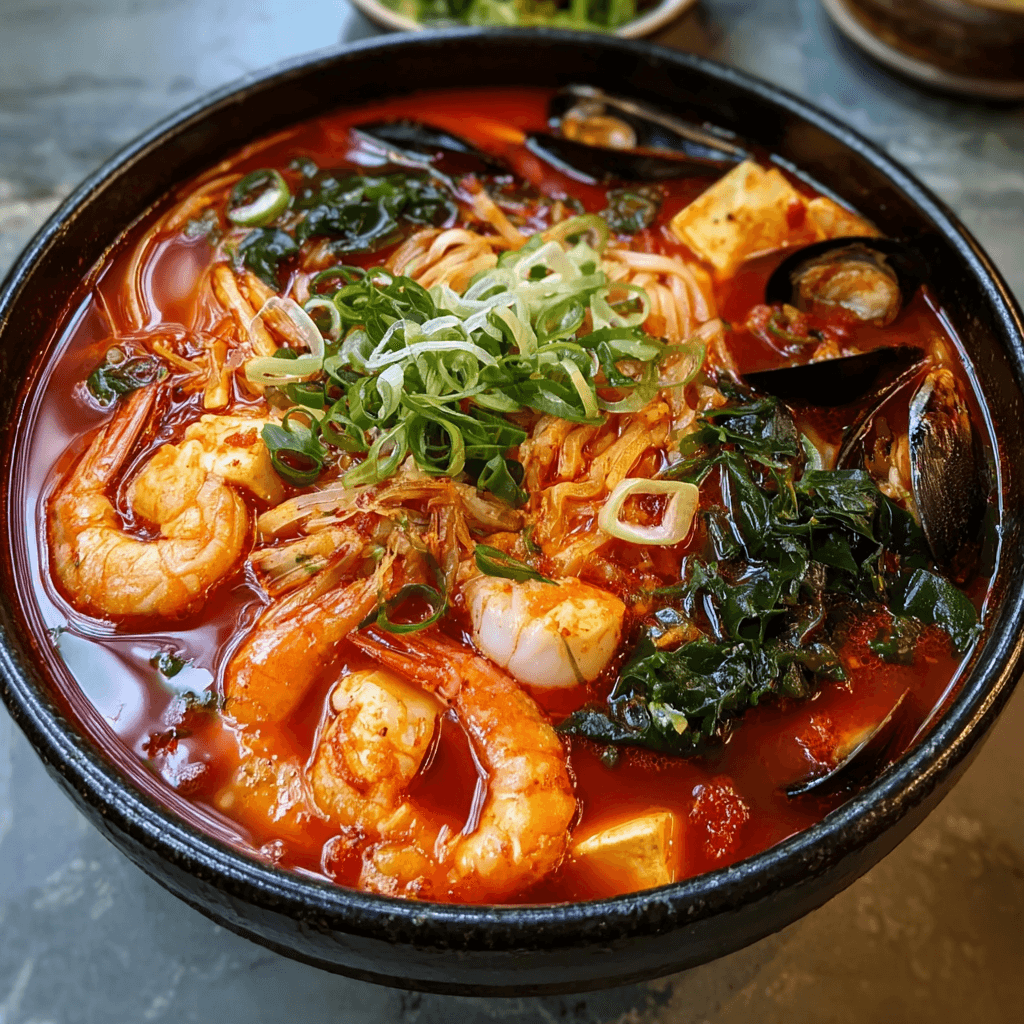
Last weekend, I hosted a casual dinner where I improvised a Jjamppong recipe. As the bubbling stew filled the kitchen with its smoky-sweet aroma, my guests questioned how a simple dish could feel so hearty. Answer: It’s the balance of chewy noodles, briny seafood, and fire-kissed gochujang. At Eminent Recipes, we prioritize meals that taste indulgent but stay family-friendly. This Jjamppong delivers just that customizable, one-pot comfort for weeknights or festive spreads.
Prep Time | 10 mins |
|---|---|
35 mins | |
Total Time | 45 mins |
Servings | 4 |
Difficulty | Easy |
Cuisine | Korean |
Why This Recipe Works
Jjamppong bypasses the fuss of gourmet cooking. My daughter can handle stirring noodles while I manage the seafood perfect for kitchen teamwork. The gochujang layer delivers a punch that builds slowly, ensuring even spice-weary palates adjust. Unlike rigid versions, this recipe adapts: Swap clams for mushrooms, reduce broth for soupier texture. After testing seven variations, I chose this balance it consistently balances umami, heat, and chewiness.
Ingredients
Ingredient | Quantity | Notes |
|---|---|---|
Korean fresh noodles | 8 oz | Use ramen if unavailable |
Cooking oil | 2 tbsp | Neutral oil like canola |
Garlic | 3 cloves | Micronz for even distribution |
Onion | 1/2 small | Red or white onion works |
Shrimp | 8 oz (10-12) | Peeled and deveined |
Manila clams | 12 oz | Rinse thoroughly before use |
Squid | 4 oz | Pre-cut rings if fresh |
Bay scallops | 4 oz | Replace with tofu for vegan |
Gochujang | 4 tbsp | Adjust to spice preference |
Gochugaru | 1 tbsp | Omits for non-spicy |
Chicken broth | 4 cups | Use halal-certified option |
Napa cabbage | 4 oz | Cut into 1-inch pieces |
Bok choy | 4 oz | Stalks and leaves separated |
Soy sauce | 1-2 tbsp | Names as taste preference |
Salt | To taste | Adjust after tasting broth |
Scallions | 2 stalks | Cut into 2-inch strips |
Step-by-Step Instructions
Preparing the Base
Heat 2 tbsp oil in a 4-quart pot over medium (temperature key: 325°F on a thermometer)
Add minced garlic, sauté 30 seconds until fragrant
Stir in onion pieces, cook 2 minutes until translucent
Adding Seafood
Toss in shrimp, clams, squid, and scallops
Cook 3 minutes while stirring gently to coat
Infusing Spices
Stir in 4 tbsp gochujang and 1 tbsp gochugaru
Cook 1 more minute to release aromatics
Simmering Broth
Pour 4 cups broth, bring to boil
Reduce heat, simmer 10 minutes for depth
Roasting Vegetables
Add napa cabbage first, then bok choy stalks
Simmer 3 minutes before adding leaves
Cook 2 more minutes to tenderize
Finalizing Texture
Add noodles, soy sauce, and salt
Cook 3 minutes or until al dente
Finish with scallions in final 30 seconds
Chef Tips for Perfect Results
Use transparent sauce consistency: Drain excess liquid if broth becomes too thin
Seafood timing: Cook clams first open shells in 2 minutes; scallops last
Balance spices gradually: Taste broth after adding gochujang, add 1 tbsp at a time if adjusting
Texture contrast: Reserve 1 oz noodles to cook separately add final 30 seconds for al dente contrast
Common Mistakes to Avoid
Skipping broth deglazing: Residue builds flavors; stir constantly to prevent sticking
Overcooking noodles: Check for springy texture; overcooked noodles break apart
Mismatched seafood: Pairing shellfish with crustaceans improves flavor fusion
Misjudging spice: Gochugaru potency varies; start with 1/2 tbsp for first attempt
Ignoring rest time: Let broth sit 2 minutes before serving allows heat to penetrate
Variations and Substitutions
Ingredient | Substitution | Impact on Flavor |
|---|---|---|
Sea scallops | Tofu cubes | Reduces seafood richness, gains vegetarian umami |
Clams | Cubed mushrooms | Diminishes brininess, adds earthy base |
Gochugura | Red pepper flakes | Less smoky; combine with 1 tsp sesame oil for balance |
Soy sauce | Low-sodium tamari | Reduces saltiness while maintaining salt profile |
Serving Suggestions and Pairings
Serve Jjamppong in shallow ceramic bowls to retain heat. Pair with matcha green tea to cut spice intensity. For sharing, set out individual piles of gochujang for customization. Ideal for:
Weeknight family dinners with steamed rice
Festive holidays alongside kimchi platter
Apocalyptic scenarios where one-pot meals reduce waste
Storage and Reheating
Method | Duration | Instructions |
|---|---|---|
Refrigerated | 3 days | Store in airtight with tongs for portioning |
Frozen | 1 month | Freeze noodles separately—rehydrate before adding |
Reheat | — | Stovetop preferred; microwave causes separation |
Nutritional Information
Nutrient | Amount per Serving |
|---|---|
Calories | 520 kcal |
Protein | 28 g |
Fat | 18 g |
Carbohydrates | 56 g |
Fiber | 4 g |
Sugar | 8 g |
Sodium | 5000 mg |
FAQS
How to customize Jjamppong for a vegan version?
Replace all seafood with tofu, use tamari instead of soy sauce, and increase veggie content. Broth remains key base.
Can I use store-bought gochujang?
Yes premium brands like Gochujang Korea provide authentic depth. Read labels to confirm no alcohol content.
How to prevent noodles from sticking during cooking?
Stir constantly and add 1 tbsp sesame oil to broth before noodles. Use tongs to separate strands when ready.
What if clams don’t open during cooking?
Discard any clams that remain closed after 5 minutes pumping mucilage which needs releasing.
Should I add rice directly to the Jjamppong?
Absorbency drowns spices. Better to serve rice separately and ladle sauce over it for portion control.
Jjamppong transforms humble ingredients into a culinary triumph. With Korean chili paste as your guide, this stew adapts to any kitchen and occasion. Master the balance of spice and texture, and your next meal will echo Korean comfort at its best. At Eminent Recipes, we believe bold flavors should never compromise simplicity now go serve this dish, and let that smoky aroma tell your story.
Print
Jjamppong Recipe: Spicy Korean Noodle Soup
- Total Time: 45
- Yield: 4 servings
- Diet: Non-Vegetarian
Description
A hearty, one-pot Korean stir-fry soup with chewy noodles, briny seafood, and smoky gochujang. Easy to customize and perfect for family cooking—swap clams for mushrooms or adjust spice levels. Ready in 45 minutes with aromatic garlic-onion base and fire-kissed flavor balance.
Ingredients
Korean fresh noodles, 8 oz
Cooking oil (canola or neutral), 2 tbsp
Garlic, 3 cloves (minced)
Onion (red or white), 1/2 small (chopped)
Shrimp, 8 oz (10-12, peeled and deveined)
Manila clams, 12 oz (rinsed)
Squid, 4 oz (pre-cut if fresh)
Bay scallops, 4 oz (or tofu for vegan)
Gochujang, 4 tbsp (adjust to taste)
Gochugaru (korean chili flakes), 1 tbsp (omit if non-spicy)
Chicken broth (halal-certified), 4 cups
Napa cabbage, 4 oz (1-inch pieces)
Bok choy, 4 oz (stems and leaves separated)
Soy sauce, 1-2 tbsp
Salt, to taste
Scallions, 2 stalks (2-inch strips)
Instructions
Heat 2 tbsp oil in a 4-quart pot at 325°F
Sauté minced garlic for 30 seconds until fragrant
Cook chopped onion for 2 minutes until translucent
Add all seafood into the pot and sauté until slightly firm
Stir in 4 tbsp gochujang and 1 tbsp gochugaru
Pour 4 cups chicken broth and bring to boil
Add napa cabbage and simmer 5 minutes
Toss in bok choy stems first, then leaves until wilted
Season with 1-2 tbsp soy sauce and adjust salt to taste
Serve noodles last, submerging briefly to cook through
Top with scallions before serving
Notes
Replace chicken broth with vegetable broth for vegan option
Bok choy can be swapped with spinach or kale
Storage: Cool completely before refrigerating for up to 3 days
Allow seafood to simmer uncovered to reduce wateriness
Add 1 tsp sugar if extra sweetness is desired
- Prep Time: 10
- Cook Time: 35
- Category: Dinner
- Method: stewing
- Cuisine: Korean
Nutrition
- Serving Size: 1 bowl
- Calories: 420
- Sugar: 4g
- Sodium: 1800mg
- Fat: 8g
- Saturated Fat: 1.5g
- Carbohydrates: 35g
- Fiber: 3g
- Protein: 20g
- Cholesterol: 220mg