
A Gingerbread Layer Cake is the ultimate holiday-inspired dessert featuring deep molasses notes, aromatic warming spices, and a velvety cinnamon cream cheese frosting. At Eminent Recipes, I developed this method to ensure your cake layers are moist, structurally sound, and perfectly spiced. Whether you are hosting a seasonal dinner party or seeking a comforting afternoon treat, this reliable recipe guarantees a professional result every time you step into your kitchen.
Recipe Overview
| Category | Details |
|---|---|
| Prep Time | 20 minutes |
| Cook Time | 35 minutes |
| Total Time | 1 hour 55 minutes |
| Servings | 12 servings |
| Difficulty | Intermediate |
| Cuisine | American Baking |
Why This Recipe Works
This recipe works because it balances the intense bitterness of unsulphured molasses with the bright, tangy profile of a full-fat cream cheese frosting. Unlike traditional cakes that can become dry, the combination of buttermilk and softened butter ensures a tender crumb that holds up beautifully to stacking and frosting.
You will love this dessert because it is a customizable foundation for various seasonal celebrations. The spices are carefully measured to provide a bold, nostalgic aroma that fills your entire home while baking. It serves as an excellent holiday dessert that appeals to both children and adults who appreciate sophisticated, spiced profiles.
Ingredients
| Ingredient | Quantity | Notes |
|---|---|---|
| All-purpose flour | 300 g | Spoon and level carefully |
| Baking soda | 5 g | Ensure it is fresh |
| Baking powder | 3 g | Check expiration date |
| Ground ginger | 6 g | Adjust for extra heat |
| Ground cinnamon | 6 g | High quality is best |
| Ground cloves | 1.5 g | Adds deep earthiness |
| Ground nutmeg | 1 g | Freshly grated preferred |
| Fine salt | 3 g | Balances sweetness |
| Unsalted butter | 283 g | Split into cake and frosting |
| Dark brown sugar | 150 g | Packed tightly |
| Large eggs | 2 | Room temperature |
| Unsulphured molasses | 225 g | Avoid blackstrap |
| Pure vanilla extract | 15 ml | Split into cake and frosting |
| Buttermilk | 240 ml | Room temperature |
| Cream cheese | 340 g | Full-fat, softened |
| Powdered sugar | 480 g | Sifted to remove lumps |
| Crystallized ginger | 30 g | Finely chopped for garnish |
Step-by-Step Instructions
Pan Preparation and Dry Mix
- Place a rack in the center of the oven and preheat to 175 degrees Celsius.
- Grease two 20 cm round cake pans and line the bottoms with parchment paper.
- Whisk the flour, baking soda, baking powder, ginger, cinnamon, cloves, nutmeg, and salt for thirty seconds until perfectly uniform.
Wet Ingredient Incorporation
- Beat the softened butter and brown sugar on medium speed for three minutes until the mixture is pale and airy.
- Add the eggs one at a time, followed by the molasses and vanilla extract, mixing thoroughly.
- Incorporate the flour mixture and buttermilk in alternating additions, starting and ending with flour, until just combined.
Baking and Assembly
- Divide the thin batter equally between the two prepared cake pans.
- Bake for 30 to 35 minutes until the tops spring back and a toothpick emerges clean.
- Cool in the pans for 15 minutes before transferring to a wire rack to cool completely.
- Beat the cream cheese and butter for two minutes, then add the flavorings and powdered sugar to finish the frosting.
- Level your cooled cake layers, spread the frosting between them, and coat the exterior before chilling to set.
Chef Tips for Perfect Results
- Always use room temperature ingredients to ensure the batter emulsifies correctly without curdling.
- Sift your powdered sugar before adding it to the cream cheese to prevent gritty frosting.
- Avoid over-mixing the batter after adding the flour, as this creates a tough, dense cake.
- Chill the finished cake for 30 minutes before slicing to achieve perfectly sharp, clean edges.
Common Mistakes to Avoid
- Using blackstrap molasses will result in an overwhelmingly bitter, metallic flavor that masks the spices.
- Baking in pans that are too small can cause the cake to overflow or bake unevenly.
- Adding frosting to warm cake layers leads to a messy, sliding structure that cannot be repaired.
- Skipping the leveling step creates a wobbly, unstable stack that leans during service.
Variations and Substitutions
| Ingredient | Substitution | Impact on Flavor |
|---|---|---|
| Buttermilk | Yogurt mixed with milk | Adds slightly more tang |
| Dark brown sugar | Light brown sugar | Less molasses depth |
| Ground cloves | Allspice | Different warming profile |
Frequently Asked Questions
Can I make this cake ahead of time?
You can bake the layers and store them wrapped in plastic for up to two days before assembling. Chilling the fully assembled cake is recommended, as the flavors meld and improve after resting for a few hours in the refrigerator.
How do I know when the cake is done?
The cake is finished when the tops spring back gently to the touch and a toothpick inserted into the center comes out clean. Ensure you do not bake past this point, as gingerbread can dry out quickly due to the sugar content in the molasses.
Why does my frosting look soft?
If your frosting is too soft, the room temperature or the cream cheese was likely too warm. Place the mixing bowl in the refrigerator for 15 minutes to firm up the fats, then beat again on high speed for one minute.
Can I swap the spices?
You can adjust the spices based on your preference, but keep the total dry spice weight consistent for the best texture. Reducing the ginger will make the cake milder, while adding extra cloves increases the intensity of the aroma.
How should I store leftover cake?
Leftover cake should be kept in an airtight container in the refrigerator for up to five days. Remove from the cold 20 minutes before serving to let the frosting reach a smooth, spreadable consistency.
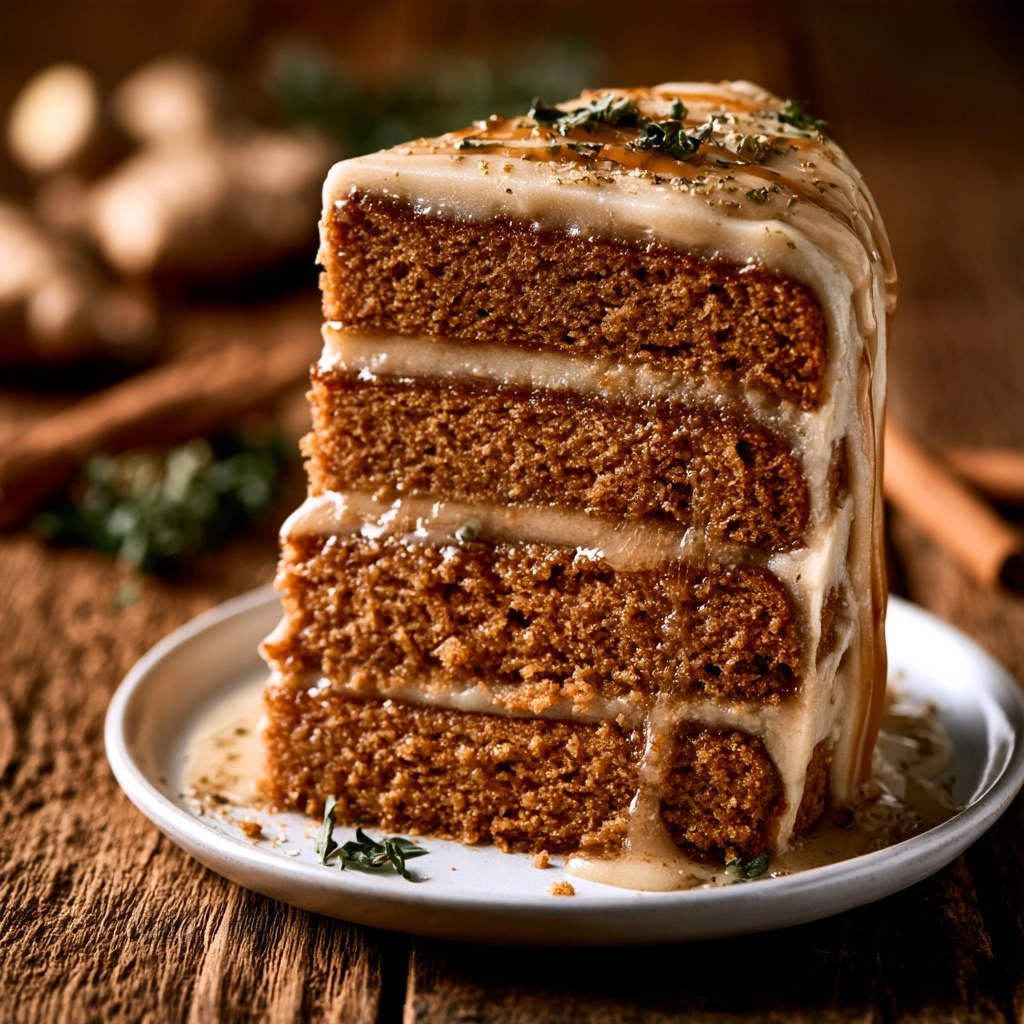
Gingerbread Layer Cake
Ingredients
Method
- Prep the pans. Place a rack in the middle and preheat to 175°C (350°F). Grease two 20 cm (8-inch) round pans (at least 5 cm tall) and line the bottoms with parchment.
- Mix the dry ingredients. Whisk the flour, baking soda, baking powder, ginger, cinnamon, cloves, nutmeg, and salt for 30 seconds until evenly colored.
- Cream the butter. Beat the butter and brown sugar on medium speed 3 minutes, until pale and fluffy.
- Add the wet ingredients. Beat in the eggs one at a time, then the molasses and vanilla. The mixture may look curdled, which is normal.
- Alternate flour and buttermilk. On low speed, add the flour mixture in 3 additions and the buttermilk in 2, starting and ending with flour. Mix just until no dry streaks remain. The batter will be thin.
- Bake. Divide the batter equally between the pans (about 650 g each). Bake 30 to 35 minutes, until the tops spring back and a toothpick comes out clean.
- Cool. Cool 15 minutes in the pans, then turn out onto a rack and cool completely, about 1 hour. Warm layers melt the frosting.
- Make the frosting. Beat the cream cheese and butter 2 minutes until smooth with no lumps. Add the vanilla, cinnamon, and salt. On low speed, add the powdered sugar, then beat on high 1 minute until fluffy. If it is soft, chill 15 minutes.
- Assemble. Level the layers with a serrated knife if domed. Spread about 250 g of frosting on the first layer, add the second, then frost the top and sides with the rest.
- Garnish and set. Sprinkle the ginger on top. Chill 30 minutes for clean slices.
Notes
- Swap: Use light brown sugar for a milder flavor. For a stronger ginger taste, add 5 g more fresh grated ginger to the batter.
- Make ahead: Bake the layers up to 2 days ahead, wrapped well at room temperature, or freeze up to 3 months.
- Storage: Keeps 4 days in the fridge. Serve at room temperature for the best texture.