
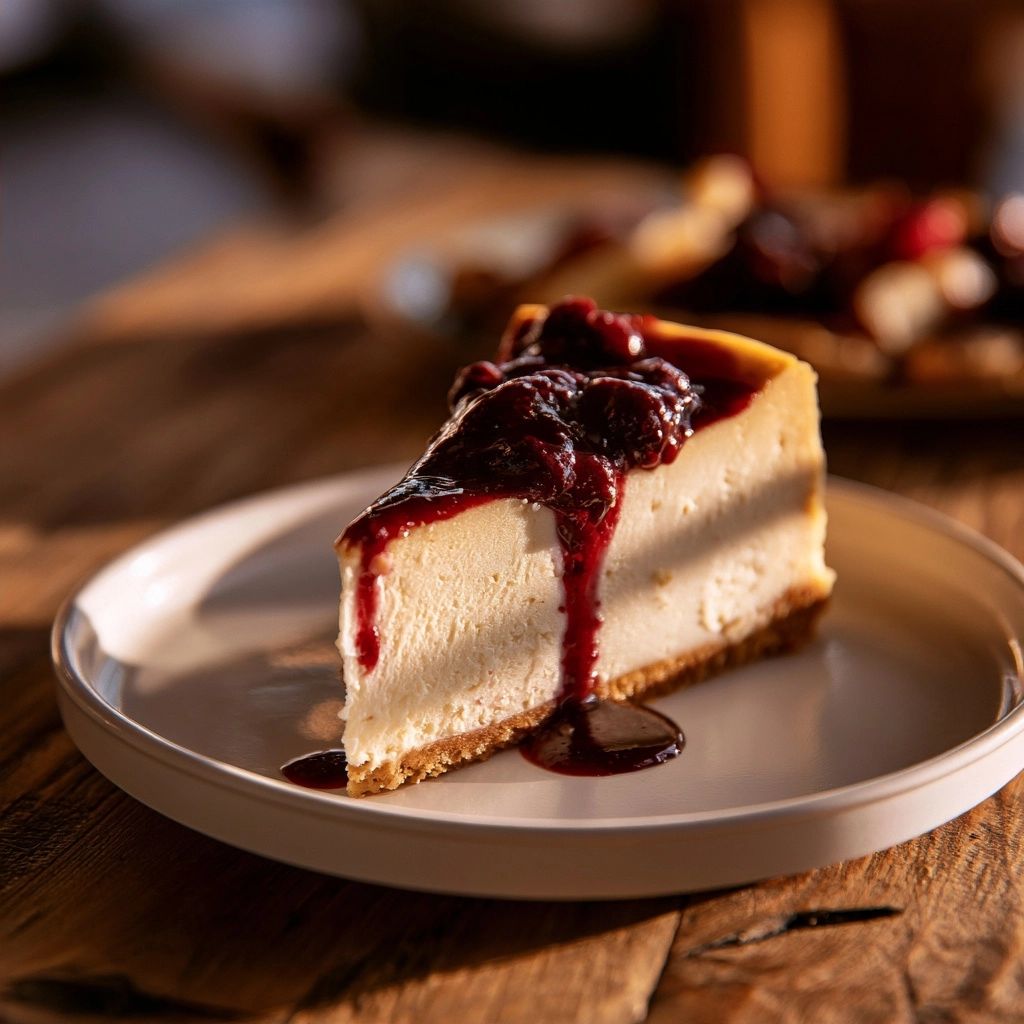
New York cheesecake serves as the gold standard for rich, dense, and velvety dessert perfection. At Eminent Recipes, I have refined this classic preparation to ensure you achieve professional results from your own kitchen. You will love this recipe because it produces a consistently smooth texture, customizable flavor profiles, and a sophisticated finish that works perfectly for both busy weeknight treats and elegant special occasions.
Recipe Overview
| Metric | Details |
|---|---|
| Prep Time | 30 minutes |
| Cook Time | 90 minutes |
| Total Time | 10 hours (including chilling) |
| Servings | 12 servings |
| Difficulty | Intermediate |
| Cuisine | American |
Why This Recipe Works
This recipe achieves the iconic New York cheesecake profile by prioritizing the temperature of the dairy ingredients. By allowing the cream cheese, eggs, and sour cream to come to room temperature before mixing, we eliminate the risk of lumps that plague many amateur attempts. This foundational step ensures a silky batter that emulsifies perfectly during the baking process.
We also utilize a gentle water bath method to regulate the heat around the springform pan. This technique prevents the edges from overcooking before the center sets, which is the primary cause of unsightly surface cracks. My approach balances ease of execution with the strict structural requirements of a high-density, authentic cheesecake.
Ingredients
| Ingredient | Quantity | Notes |
|---|---|---|
| Graham Cracker Crumbs | 150 g | Substitute with digestive biscuits |
| Granulated Sugar (Crust) | 50 g | White superfine sugar works best |
| Unsalted Butter | 85 g | Melted and slightly cooled |
| Cream Cheese | 900 g | Full-fat, softened room temperature |
| Granulated Sugar (Filling) | 250 g | Do not reduce; affects structure |
| All-Purpose Flour | 30 g | Helps prevent cracking |
| Fine Salt | 3 g | Enhances sweetness |
| Lemon Zest | 5 g | Freshly grated |
| Large Eggs | 4 | Room temperature |
| Sour Cream | 240 g | Full-fat for best creaminess |
| Heavy Cream | 120 ml | Room temperature |
| Lemon Juice | 15 ml | Freshly squeezed |
| Pure Vanilla Extract | 10 ml | High-quality extract recommended |
Step-by-Step Instructions
Preparation and Crust
- Soften all dairy ingredients, including cream cheese, eggs, sour cream, and heavy cream, by letting them sit at room temperature for 2 hours.
- Preheat your oven to 175°C (350°F) and grease a 23 cm (9-inch) springform pan thoroughly.
- Wrap the outside of your pan with two layers of heavy-duty aluminum foil to create a waterproof barrier.
- Mix the graham cracker crumbs, 50 g sugar, and melted butter in a bowl until the texture resembles wet sand.
- Press this mixture firmly into the bottom of your prepared pan using a flat-bottomed measuring cup.
- Bake the crust for 10 minutes, then remove it and allow it to cool for 10 minutes while lowering the oven temperature to 160°C (325°F).
Filling and Baking
- Beat the cream cheese in a large mixing bowl on low speed for 2 minutes until completely smooth.
- Scrape the sides of the bowl and paddle to ensure no lumps remain.
- Add the 250 g sugar, flour, salt, and lemon zest to the bowl.
- Mix on low speed for 1 minute until the dry ingredients are fully incorporated.
- Add the eggs one at a time, mixing on low speed until each egg disappears, taking care not to overbeat.
- Incorporate the sour cream, heavy cream, lemon juice, and vanilla on low speed just until the mixture is uniform.
- Pour the filling into the crust and tap the pan twice on the counter to release trapped air bubbles.
- Place the pan into a large roasting pan and fill the roasting pan with hot water until it reaches halfway up the sides of the cake pan.
- Bake for 75 to 90 minutes until the edges are set and the center 7 cm jiggles slightly when moved.
Cooling
- Turn off the oven and leave the door cracked open for 1 hour to allow for a gentle transition in temperature.
- Lift the pan from the water bath, remove the foil, and run a thin knife around the interior edge.
- Cool the cake at room temperature for 1 hour.
- Cover and chill the cake in the refrigerator for at least 6 hours, preferably overnight, before slicing.
Chef Tips for Perfect Results
- Always use full-fat blocks of cream cheese rather than spreadable tubs, which contain excess water.
- Avoid over-mixing the batter after adding eggs to prevent incorporating too much air, which causes the cake to rise and then collapse.
- Measure the internal temperature with an instant-read thermometer; your target is 65°C (150°F) for the center.
- Dip your knife in hot water and wipe it dry between every single cut to ensure clean, professional-looking slices.
Common Mistakes to Avoid
- Using cold ingredients: This creates small lumps of cream cheese that do not blend, resulting in a grainy texture.
- Over-baking: If the entire cake becomes firm and stops jiggling, it will be dry and prone to surface cracking.
- Opening the oven door too early: This causes rapid temperature drops that shock the batter.
- Not resting the cake: Skipping the 6-hour chill time means the center will be too soft to slice properly.
Variations and Substitutions
| Ingredient | Substitution | Impact on Flavor |
|---|---|---|
| Lemon Zest | Orange Zest | Adds a warmer, citrus profile |
| Sour Cream | Greek Yogurt | Adds a tangier, slightly lighter finish |
| Vanilla Extract | Almond Extract | Creates a distinct, nutty aroma |
Frequently Asked Questions
Can I use low-fat cream cheese for this recipe?
You should avoid low-fat cream cheese because it lacks the necessary fat content to provide the signature velvety texture of a New York cheesecake. Higher water content in low-fat versions often leads to a rubbery or runny final product.
How do I know when the cheesecake is finished baking?
The cheesecake is finished when the edges appear set and the center 7 cm still retains a visible jiggle. A thermometer inserted into the center should read 65°C (150°F) for perfect density.
Why did my cheesecake crack on top?
Cracks usually form due to rapid cooling or over-baking the batter at too high a temperature. Following the gradual oven-cooling method prevents this common structural issue.
Can I make this dessert two days in advance?
You can definitely make this cheesecake ahead of time, as it actually improves in flavor after sitting in the refrigerator. It stays fresh in the fridge for up to 5 days when covered properly.
How should I store leftovers?
Leftovers must be kept in the refrigerator in an airtight container to prevent the crust from absorbing moisture. Storing it correctly ensures the texture remains consistent for several days.
Conclusion
Mastering this New York cheesecake recipe brings a high-end bakery experience directly into your home kitchen. By following the precise temperature and cooling guidelines, you ensure a smooth, crack-free finish every single time. This dessert stands as a testament to the power of simple, quality ingredients treated with care. Enjoy the dense, creamy satisfaction that only a properly prepared, classic cheesecake can offer for your next celebration or quiet evening at home.
New York Cheesecake Recipe Made Easy
Ingredients
Method
- Soften the dairy. Take the cream cheese, eggs, sour cream, and heavy cream out of the fridge 1.5 to 2 hours ahead. Cold ingredients cause lumps and cracks.
- Wrap the pan. Place a rack in the middle and preheat to 175°C (350°F). Grease a 23 cm (9-inch) springform pan, at least 7 cm tall. Wrap the outside in 2 layers of heavy-duty foil to keep water out.
- Make the crust. Mix the crumbs, 50 g sugar, and melted butter until it looks like wet sand. Press firmly into the bottom of the pan with the bottom of a measuring cup. Bake 10 minutes, then cool 10 minutes. Lower the oven to 160°C (325°F).
- Beat the cream cheese. In a large bowl, beat the cream cheese on low speed 2 minutes, until completely smooth. Scrape the bowl and paddle well.
- Add the sugar. Add the 250 g sugar, flour, salt, and zest. Mix on low 1 minute, until smooth.
- Add the eggs. Add the eggs one at a time on low speed, mixing just until each disappears. Overbeating adds air and makes the cake crack.
- Add the liquids. Mix in the sour cream, heavy cream, lemon juice, and vanilla on low just until smooth. Scrape the bowl once more.
- Fill the pan. Pour the filling over the crust and tap the pan twice on the counter to release air bubbles.
- Set up the water bath. Place the pan in a large roasting pan. Pour hot water into the roasting pan until it reaches halfway up the sides of the springform.
- Bake. Bake 75 to 90 minutes, until the edges are set and the center 7 cm still jiggles like gelatin, or reads 65°C (150°F) on an instant-read thermometer.
- Cool in the oven. Turn off the oven, crack the door open, and let the cake cool inside for 1 hour. This gradual cooling prevents cracks.
- Cool and chill. Lift the pan out of the water, remove the foil, and run a thin knife around the edge. Cool at room temperature 1 hour, then cover and chill at least 6 hours, preferably overnight.
- Serve. Release the springform and slice with a sharp knife dipped in hot water and wiped dry between cuts.
Notes
- Topping: Serve with 300 g strawberries macerated with 25 g sugar for 30 minutes (about $2.50 more), or cherry sauce.
- Blocks: Use full-fat block cream cheese, not whipped or tub-style, or the cake won’t set.
- Cracks: Small cracks are normal and hidden by a topping. They come from overbeating, cold ingredients, or fast cooling.
- Storage: Keeps 5 days in the fridge. Freezes up to 2 months, wrapped well.