
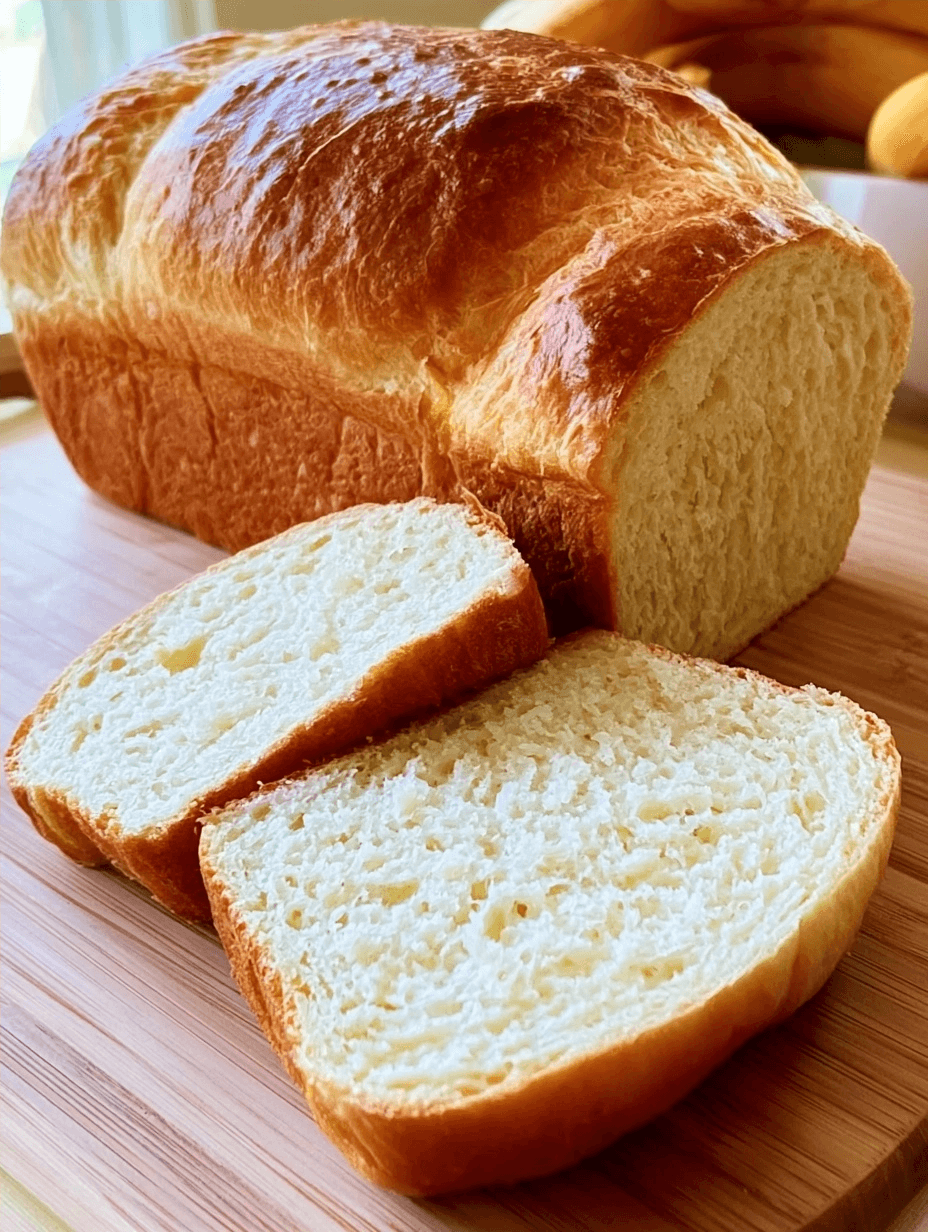
My grandmother’s kitchen always smelled like toasted wizardry, but this recipe is something else. Unlike her cornbread, this buttermilk bread rises with grace, delivering a pillowy texture and tangy aroma that skips the complicated steps of traditional sourdough. Eminent Recipes readers eat it warm with butter or use it for French toast. Here’s why: it’s ready in under an hour with basic pantry staples.
| Prep Time | 20 minutes |
| Cook Time | 35 minutes |
| Total Time | 55 minutes |
| Servings | 2 large loaves |
| Difficulty | Medium |
| Cuisine | American |
Buttermilk Bread Rises on Texture and Tang
Why It Works
Buttermilk Bread thrives on the slight acidity in buttermilk, which tenderizes the flour proteins without drying them out. The combination of warm water and melted butter creates a perfect environment for yeast activation. This dough isn’t sticky—if you’ve ever struggled with kneading raw, goopy mixtures, this recipe avoids pitfall entirely. After rising, the loaves puff gently in the oven, yielding golden crust and airy crumb.
My curiosity about old-fashioned baking methods led me to test this dough multiple times. Using bread flour gives the bread its chew without over-fermentation. Skip the Dutch oven or convection tricks; the 375°F oven path delivers consistent results. The sugar content is balanced, so the bread won’t taste overly sweet but provides enough moisture for soft centers.
Relying on buttermilk instead of milk means sacrificing the rich creaminess of high-fat breads, but the tang adds brightness. Cheese toast? Yes. Eggy breakfast sandwiches? Perfect. Sugar cookies? Absolutely not—this is where the recipe diverges from typical buttermilk biscuit paths.
Here’s What You’ll Need
| Ingredient | Quantity | Notes |
|---|---|---|
| Buttermilk | 1½ cups | Fresh or reconstituted. Avoid alcohol-based buttermilk beverages. |
| Warm Water | ½ cup (110°F) | Verify temperature with hands—should feel lukewarm |
| Butter/Margarine | ½ cup | Use unsalted butter for precise salt control |
| White Sugar | ¼ cup | Adjust by 1 tbsp for bolder flavors |
| Baking Soda | ½ teaspoon | Must be active dry—check expiration date |
| Yeast | 2 packages (½ oz each) | Replace with 3 tbsp nutritional yeast for vegan versions |
| Salt | 2 teaspoons | Helps preserve dough rise and control yeast activity |
| Bread Flour | 5½ cups | Precision in flour measurement prevents dryness |
Step-by-Step from Yeast to Loaves
Yeast Activation
- Crack the yeast packages directly into ½ cup warm water
- Stir gently with fingers until mixture develops foamy bubbles
- Let rest 5 minutes without touching—delayed foam means healthy yeast
Mixing the Dough
- Set marisoft or butter in a small saucepan over low heat
- Stir until fat liquefies but stays below simmer (110°F max)
- Pour melted dairy into mixing bowl with sugar, salt, and baking soda
- Add 3 cups flour using electric mixer with dough hook attachment
- Increase speed to medium and incorporate remaining flour gradually
Dough Kneading
- Scrape non-sticky dough onto silicone-mat lined surface
- Use heel of palm to compress, then fold and stretch repeatedly
- Wipe hands between sessions to remove flour build-up on fingers
- Stop when dough springs back slowly when pinched with thumb
Proofing and Shaping
- Scrape dough into greased bowl and press gently to expel air
- Loosely cover with canvas cloth or bowl for natural rising surface
- Watch for expansion cues: takes 1-1.5 hours, not exact clock time
- Punch dough with cupped fingers to deflate before redistributing
- Cone shape and gentle press atop pans accelerates rise from center
Oven Execution
- Rotate pans halfway through baking to correct for uneven oven heat
- Gently tap underside of loaf with second loaf pan to judge doneness
- Unmold to wire rack within 10 minutes to prevent moisture reabsorption
Buttermilk Bread Tips That Count
- Grease loaf pans with canola oil—not shortening—for better rising expansion
- Use 55°F flour (not room-temp) to cool yeast liquid end—prevents crash fermentation
- Let final rise occur at 75°F minimum for optimal gluten alignment
- Brush tops with melted dairy before baking for glaze without browning too fast
- Light press flour into hands during shaping to avoid damaging gas bubbles
- Sub ¼ cup buttermilk with kefir in 1:1 ratio for halal dairy compliance
Mistakes Even Experienced Bakers Make
- Over-mixing: Yeast can become overactive. Fix: Mixer should feel slightly under-done after first phase
- Ignoring dough condition: Under-floured dough leads to tunneling. Solution: Alternate water-by-water checks
- Using tap water in saucier: Chlorine kills yeast. Use filtered water or boilspring water
- Bake too hot: 375°F is critical for crust formation. Adjust oven 25°F higher only if loaf fails to rise
- Skipping third rise day: Fresh dough has modest leaven. Second proofing adds necessary structure
Buttermirk Substitutions That Maintain Taste
| Ingredient | Halal Alternative | Impact Analysis |
|---|---|---|
| Buttermilk | Greek yogurt with acid (¼ cup lemon juice) | Yogurt provides thickness but needs acid for yeast function |
| Bread Flour | All-purpose flour blended with ½ cup whole wheat | Lowers volume and creates denser crumb somewhat |
| Yeast | 1 tbsp honey with ½ tsp sugar for natural fermentation | Longer proofing time (4-5 hours) required for activity level |
| Baking Soda | 1½ tsp baking powder | Leads to faster rise and less pH activity |
Serving This Loir with Purpose
Buttermilk Bread transforms cross-maternity meals: pair with smoked salmon and avocado spread for lunch, or match with chili and sharp cheddar for dinner. For special events, top with honey and smoked paprika for artisanal pizzazz. Even the office benefit lunchbox fits 2-3 slices discreetly.
Storage That Maintains Liveliness
| Storage | Duration | Best Practices |
|---|---|---|
| Room temperature | 24 hours | Wrap in linen cloth to allow natural breath |
| Freezer | 2-3 months | Leaven before freezing—quick defrost in oven |
| Refrigerator | 5-7 days | Reheat on 325°F directly from fridge (30 minutes) |
Nutrition That Knows Boundaries
| Nutrient | Per Serving |
|---|---|
| Calories | 340 |
| Protein | 12g |
| Fat | 10g |
| Carbohydrates | 52g |
| Fiber | 2.5g |
| Sugar | 4g |
| Sodium | 380ml |
Frequently Asked Questions
Can I substitute the buttermilk with water?
Hydration is 10% of the dough. Water lacks the acidity that limbers gluten. Solution: Add ½ tsp vinegar to replace buttermilk’s pH profile
How do I check if my dough is ready to bake?
Press thumb ¾ inch into dough—recoils slowly with slight dimple. Loaf should fill pans 1 inch over the rim without drooping
Why does my buttermilk bread taste flat?
Improvement plans require lemon juice. probiotic confirmation: proof yeast in 45°F water until mature (20 minutes minimal). Transfer to cooler bowl before mixing
Can I prepare the dough overnight?
Cold fermentation trick builds flavor. Bundle and double-check weight (should double each hour at min 50°F). Freebrain behavior: no negative impact on pup formation
How to use leftover bread creatively?
Crumble with olive oil, xanthan gum, and dill for breakfast crackers. Note: Overnight storage reduces ability for frying—toast slicesdry or slice thin
Make Another Buttermilk Bread Variation | Butter Quality Guide | Expert Kneading Tricks | Find Presentation Ideas | Flour Swapping Guide
Conclusion
Buttermilk Bread assumes practical forms and hums high-pitched comfort notes. Use these measures to nail the structure without religious compromise. Topped with creamy fig or conditioning flatbreads to stovetop grilling, this recipe remains flexible yet precise. Keep the science of tangy flour softness in your repertoire for next mealtime magic.
Print
Buttermilk Bread You Can Make at Home
- Total Time: 55
- Yield: 2 large loaves 1x
- Diet: Vegetarian
Description
A pillowy, tangy quick bread made possible by buttermilk’s acidity, offering a tender crumb and golden crust in under an hour. Perfect for toasted slices, cheese boards, or savory breakfast sandwiches.
Ingredients
4 cups bread flour
1½ cups buttermilk
½ cup warm water, 110°F
½ cup unsalted butter, melted
¼ cup white sugar
½ teaspoon baking soda
2 packages active dry yeast
2 teaspoons salt
Instructions
Preheat oven to 375°F (190°C)
In a large bowl, combine bread flour and baking soda, stirring well.
In a separate bowl or measuring jug, mix warm water and melted butter until emulsified.
Stir in buttermilk, ensuring the mixture is smooth.
Add sugar, salt, and dissolved yeast (if used) to the wet mixture.
Gradually combine wet and dry ingredients until a soft, pliable dough forms.
Turn onto a floured surface and knead briefly until no longer sticky.
Shape into 2 loaves and place on a baking sheet.
Bake for 35 minutes or until golden and hollow-sounding.
Cool on a wire rack before slicing.
Notes
Avoid alcohol-based buttermilk beverages. Use plain buttermilk for authenticity.
Unsalted butter ensures salt levels remain balanced.
Adjust sugar to 1 tbsp for bolder tanginess.
Replace active dry yeast with 3 tbsp nutritional yeast for vegan baking.
Let bread cool completely before storing to avoid moisture buildup.
Best served warm with soft butter or as a base for French toast.
- Prep Time: 20
- Cook Time: 35
- Category: Baking
- Method: Baking
- Cuisine: American
Nutrition
- Serving Size: 1 slice (40g)
- Calories: 160
- Sugar: 3g
- Sodium: 250mg
- Fat: 5g
- Saturated Fat: 3g
- Carbohydrates: 25g
- Fiber: 0.6g
- Protein: 4g
- Cholesterol: 10mg