
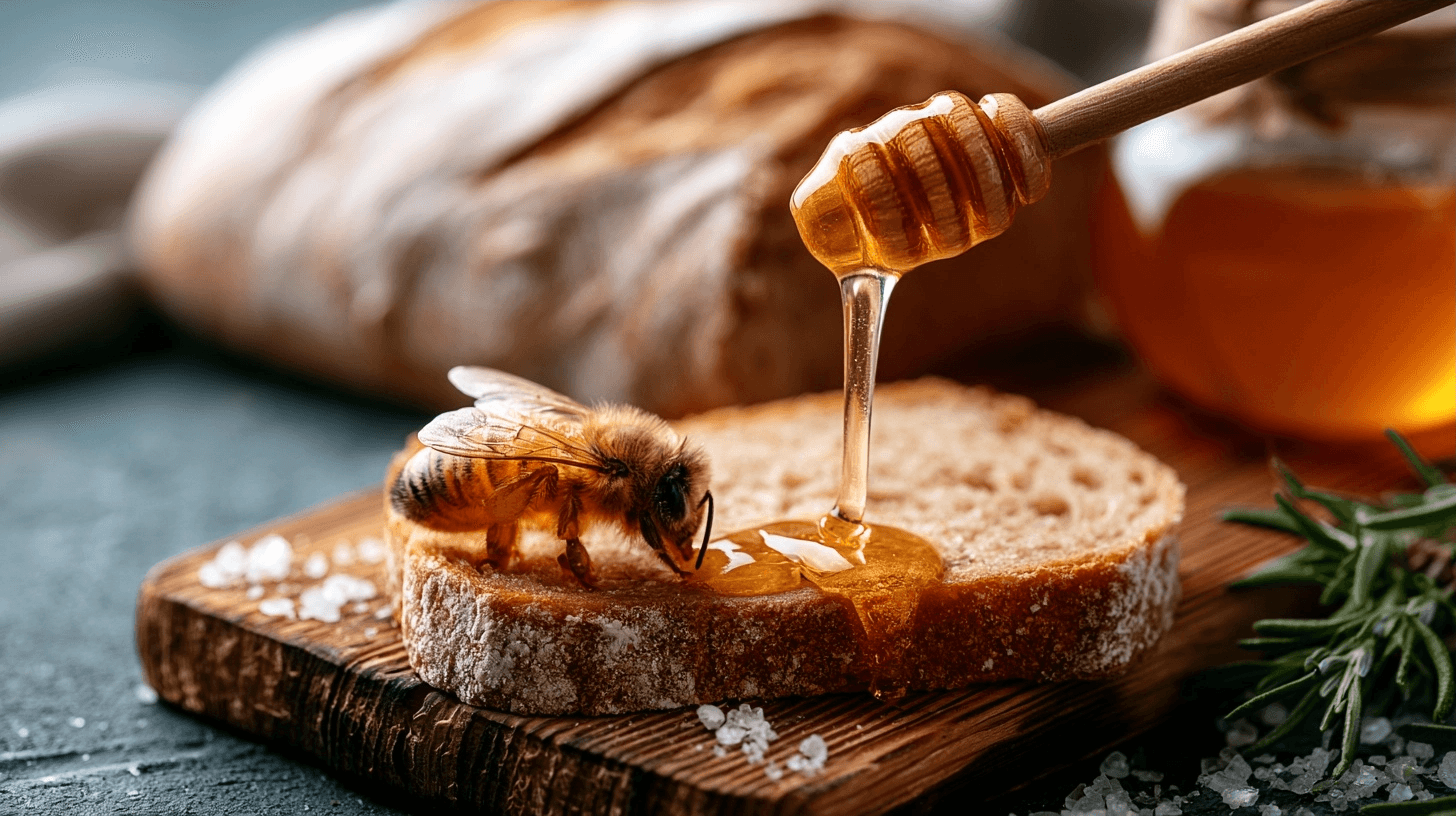
Are you considering using honey instead of sugar in your next bread recipe? Many home bakers wonder about this exact substitution. Honey can indeed replace granulated sugar or white sugar in various baked goods, including delicious sandwich bread. This natural sweetener offers a distinct flavor and several unique properties compared to its granulated counterpart. However, simply swapping honey for sugar requires some adjustments to your recipe. Honey is sweeter than sugar, meaning you often need less of it to achieve the desired sweetness. Furthermore, honey contains moisture, which affects the overall liquid content of your dough. Understanding these differences is key to successful baking outcomes. This article will explore how to effectively substitute honey for sugar in bread recipes. We will cover the necessary adjustments, including how to reduce liquid, and discuss the impact on your final product.
The Sweet Truth: Substituting Honey for Sugar in Bread
Can you use honey instead of sugar in bread? Yes, you can substitute honey for granulated sugar in bread recipes. However, this is not a simple 1:1 substitution. Honey is a liquid sweetener. It also contains more fructose than table sugar. This means honey is sweeter than sugar. You will need less of it. Honey also affects the texture and volume of your finished loaf. It can make the crumb softer. Furthermore, honey introduces additional moisture into the mixture. You must adjust the recipe’s liquid content. Reduce the amount of water or milk by about one-quarter cup for every cup of honey used. Honey can also make bread browns faster. Consider a lower oven temperature to prevent over-browning. Honey’s acidity also impacts the dough. It can activate baking soda more effectively. This is especially true if you are using whole wheat flour. The natural fermenting agent, yeast, also reacts differently to honey. It ferments more quickly due to the simple sugars.
Mastering the Conversion: Honey to Sugar Ratios for Bread
How do you master the conversion from honey to other sweeteners for bread? Understanding the correct ratios is crucial for successful baking. Honey is significantly sweeter than table sugar. Therefore, you cannot simply swap them equally. A good starting point is to use half to two-thirds the amount of honey for every portion of the other sweetener. For instance, if a recipe calls for one cup of sugar, try using 1/2 to 2/3 cup of honey instead. This adjustment accounts for honey’s concentrated sweetness. Remember that honey is also a liquid. You must reduce other liquids in your recipe. For every cup of honey added, decrease the total liquid by 1/4 cup. This prevents your dough from becoming too wet. Adjusting the baking temperature is also important. Honey causes faster browning. Lower your oven temperature by 25°F to prevent over-darkening. These careful adjustments ensure a delicious and well-textured loaf.
Adjusting Liquids and Other Ingredients
How do you adjust liquids and other ingredients when substituting honey for sugar? Honey introduces moisture into your dough. Consequently, you must reduce other liquids in the mixture. For each cup of honey used, decrease the water or milk by about one-quarter cup. This prevents the mixture from becoming too sticky. You might also notice a quicker browning of your baked goods. Consider lowering the oven temperature by 25°F to prevent over-browning. Honey’s natural acidity also impacts other components. It can enhance the leavening agent’s activity. This is particularly true when using whole wheat flour. The fermenting agent, yeast, will also become more active.
| Ingredient Adjustment | Guideline |
|---|---|
| Liquid (Water/Milk) | Reduce by 1/4 cup per 1 cup honey |
| Oven Temperature | Decrease by 25°F |
| Leavening Agent | Monitor activity; honey enhances it |
Temperature and Texture Considerations
Does honey affect the warmth and feel of your bread? Yes, honey impacts both the internal warmth needed for cooking and the resulting consistency of your final product. Honey causes items to brown more quickly. Therefore, you may need to adjust your oven’s warmth. Consider reducing the temperature by 25°F. This helps prevent the crust from becoming too dark. Honey also imparts a softer, more tender crumb. This is a desirable characteristic for many types of bread. Furthermore, the natural humectant properties of honey contribute to a longer shelf life. Your bread will stay fresh for an extended period. The liquid nature of this ingredient also affects the dough’s workability. It can make the mixture feel stickier.
Tips for Successful Honey Bread Baking
What are some tips for successful honey bread production? Several key adjustments ensure excellent results when using this natural sweetener. Always remember that this golden liquid is more potent than other sweeteners. Consequently, you will need less of it. For instance, use about half to two-thirds the amount of honey when replacing common table sugar. This adjustment prevents your final product from becoming overly sugary. Furthermore, this ingredient adds liquid to your dough. Reduce other fluids in your mixture to maintain proper consistency. A good rule of thumb is to decrease other liquids by one-quarter cup for every cup of honey. This helps prevent a sticky mixture. Additionally, this ingredient promotes quicker browning. Lower your oven temperature by 25°F to avoid over-darkening.
Choosing the Right Honey for Flavor and Function
How do you choose the right honey for flavor and function? The type of honey you select significantly impacts the final taste and characteristics of your baked goods. Different varieties offer distinct flavor profiles. For instance, a light, floral clover honey will provide a subtle complement. Darker varieties, like buckwheat honey, offer a more robust and earthy taste. Consider the overall flavor you desire in your bread. Do you want a delicate hint or a pronounced richness? The functional properties also vary. Some honeys are thicker than others. This can affect the dough’s consistency. Consequently, you may need to adjust other liquid components slightly.
Troubleshooting Common Honey Bread Issues
What are some common honey bread issues and how can you fix them? Sometimes, using honey can lead to unexpected challenges in your bread making. One frequent problem is overly sticky dough. This happens because honey is a liquid and also attracts water. To remedy this, slightly reduce the total amount of liquid in your mixture. Alternatively, add a small amount of extra dry ingredients until the dough is manageable. Another issue can be bread that browns too quickly. This is due to the natural sugars in honey caramelizing faster. Lowering your oven temperature by about 25°F can prevent over-darkening. Additionally, if your bread seems too dense, ensure your leavening agent is active. Honey can enhance its performance, but sometimes other factors might inhibit it. Always check the freshness of your leavening agent.
Why Choose Honey Over Sugar in Your Bread?
Why choose this natural sweetener over common table crystals in your bread? Opting for this golden liquid offers several distinct advantages. It provides a unique aromatic profile that standard white crystals cannot match. This alternative also adds a rich, complex undertone to your finished product.
Furthermore, this golden ingredient acts as a natural preservative. It helps your baked goods stay fresh for longer periods. The natural properties of this substance also contribute to a softer crumb. This results in a more pleasant eating experience.
Key Differences: Honey vs. Sugar in Bread Making
What are the key differences between honey and sugar in bread making? These two common ingredients behave quite differently in your mixtures. The primary distinction lies in their composition. Table crystals are almost pure sucrose. However, the golden liquid contains fructose and glucose. This difference impacts how they interact with other components. For instance, the liquid form of the golden ingredient adds fluid to your mixture. This requires adjustments to other liquids. Conversely, table crystals are dry. Furthermore, the golden liquid caramelizes at a lower temperature. This leads to quicker browning of your crust. It also helps bread retain its freshness longer due to its hygroscopic nature. Table crystals do not offer this same advantage. | Feature | Golden Liquid | Table Crystals | | :———— | :—————————————— | :————————————– | | **Composition** | Fructose and glucose, plus trace elements | Pure sucrose | | **Form** | Liquid | Dry crystals | | **Hydration** | Adds liquid to dough | Dry; requires additional liquid | | **Browning** | Browns faster; lower oven temperature needed | Browns slower | | **Preservation** | Natural preservative; retains freshness | No significant preservative qualities |
Nutritional Benefits of Honey in Bread
What are the nutritional benefits of including this natural sweetener in your baked goods? This golden ingredient offers more than just a pleasant taste. It contains various beneficial compounds. For instance, it provides antioxidants, which help protect your body’s cells. Furthermore, this natural product has trace amounts of vitamins and minerals. These include B vitamins, calcium, and iron. While not in large quantities, these micronutrients contribute to overall well-being. This contrasts with refined white crystals, which offer minimal nutritional value. The complex sugars in this golden liquid also provide a more sustained energy release. This can help avoid sudden blood sugar spikes. Consider these nutritional advantages when choosing your preferred sweetener.
| Nutrient Category | Presence in Golden Liquid |
|---|---|
| Antioxidants | Yes (flavonoids, phenolic acids) |
| Vitamins | Trace amounts (B vitamins) |
| Minerals | Trace amounts (calcium, iron, potassium) |
| Glycemic Impact | Moderate (sustained energy) |
Delicious Honey-Sweetened Bread Recipes to Try
Are you looking for delightful ways to incorporate the golden liquid into your baked goods? Many wonderful creations benefit from this natural sweetener. You can easily adapt many traditional preparations. Consider a classic whole wheat bread. The nuanced notes of the golden liquid complement the nutty taste of whole grains beautifully. Alternatively, try a soft milk roll for breakfast. Its delicate crumb is enhanced by the rich, floral notes of the golden ingredient. Furthermore, a rustic artisan bread can gain a unique depth. | Bread Type | Key Characteristics | | :——————– | :————————————————— | | Whole Wheat Sandwich | Hearty, wholesome, excellent with spreads | | Milk Rolls | Soft, tender, perfect for breakfast or dinner | | Oat Porridge Bread | Dense, chewy, stays fresh for several days | | Rosemary Olive Bread | Savory with a hint of natural sugar, great with meals |
Storing Your Homemade Honey Bread
How should you store your homemade bread to maintain its freshness? Proper storage is crucial for preserving the quality and extending the shelf life of your finished product. This helps keep it delicious for longer. First, ensure the bread has cooled completely before storing it. Warm bread creates condensation. This can lead to a soggy crust. It also encourages mold growth. For short-term storage, keep the bread at room temperature. Place it in an airtight container or a bread box. You can also wrap it tightly in plastic wrap. This method works well for up to three days. For longer preservation, consider freezing your bread. Slice it first for easier portioning. Then, wrap individual slices or the whole item tightly. Use plastic wrap, then aluminum foil. Frozen bread stays fresh for several weeks. Thaw it at room temperature or toast directly.
FAQ About Using Honey in Bread
Can I substitute honey for sugar in bread recipes?
Yes, you can substitute honey for refined crystalline sweeteners in many bread preparations. However, it requires some adjustments. You will need to modify other liquid components and consider the impact on the final product.
What is the honey to sugar ratio for baking bread?
A good starting point is to use half the amount of honey compared to the specified amount of crystalline sweetener. For instance, if a preparation calls for one cup of white crystals, use half a cup of honey. This accounts for the increased potency of the liquid sweetener.
Does honey change the texture of bread compared to sugar?
Indeed, honey affects the bread’s consistency. It tends to create a softer, more tender crumb. This is due to its humectant properties, which draw in and retain fluid. The internal structure may also be slightly denser.
Are there any downsides to using honey instead of sugar in bread?
There are a few considerations. Preparations made with honey may brown more quickly due to its fructose content. The active cultures in honey can also impact the rising process. Additionally, the distinct taste of honey will be noticeable in the finished item.
Is honey bread sweeter than sugar bread?
Typically, bread crafted with honey will have a more pronounced sweet taste. Honey is naturally sweeter than its crystalline counterpart. This enhanced sweetness comes from its unique composition of different simple carbohydrates.
Honey Whole Wheat Sandwich Bread
- Total Time: 55 minutes
- Yield: 1 loaf 1x
Description
A delicious and tender whole wheat sandwich bread, naturally sweetened with honey. This recipe incorporates the expert tips for substituting honey for sugar, ensuring a perfectly baked loaf with a soft crumb and rich flavor.
Ingredients
1 ½ cups warm water (105-115°F)
2 ¼ teaspoons active dry yeast (1 standard packet)
¼ cup honey
2 tablespoons olive oil, plus more for greasing
1 teaspoon salt
3 ½ – 4 cups whole wheat flour
Instructions
In a large bowl, combine the warm water, yeast, and honey. Stir gently and let sit for 5-10 minutes, until foamy. This indicates the yeast is active.
Add the olive oil and salt to the yeast mixture and stir to combine.
Gradually add 3 cups of whole wheat flour, mixing with a wooden spoon or dough hook until a shaggy dough forms. Add the remaining flour, ½ cup at a time, until the dough comes together and is no longer overly sticky. You may not need all 4 cups.
Turn the dough out onto a lightly floured surface and knead for 8-10 minutes, until smooth and elastic. The dough will be slightly sticky due to the honey, but should be manageable.
Lightly grease a clean bowl with olive oil. Place the dough in the bowl, turning once to coat. Cover the bowl with plastic wrap or a clean kitchen towel and let rise in a warm place for 1-1.5 hours, or until doubled in size.
Punch down the risen dough to release the air. Turn it out onto a lightly floured surface and shape it into a loaf. You can gently flatten it into a rectangle and then roll it up tightly, pinching the seams to seal.
Place the shaped loaf into a lightly greased 9×5 inch loaf pan. Cover the pan with plastic wrap or a clean kitchen towel and let it rise again in a warm place for 30-45 minutes, or until it has nearly doubled in size and is puffy.
Preheat your oven to 375°F (190°C). Remember to reduce the temperature by 25°F from a standard bread recipe due to the honey.
Bake the bread for 30-35 minutes, or until the crust is golden brown and the internal temperature reaches 200-210°F (93-99°C). If the crust is browning too quickly, you can loosely tent it with aluminum foil.
Remove the bread from the oven and immediately transfer it to a wire rack to cool completely before slicing. This prevents the bottom from becoming soggy.
- Prep Time: 20
- Cook Time: 35