
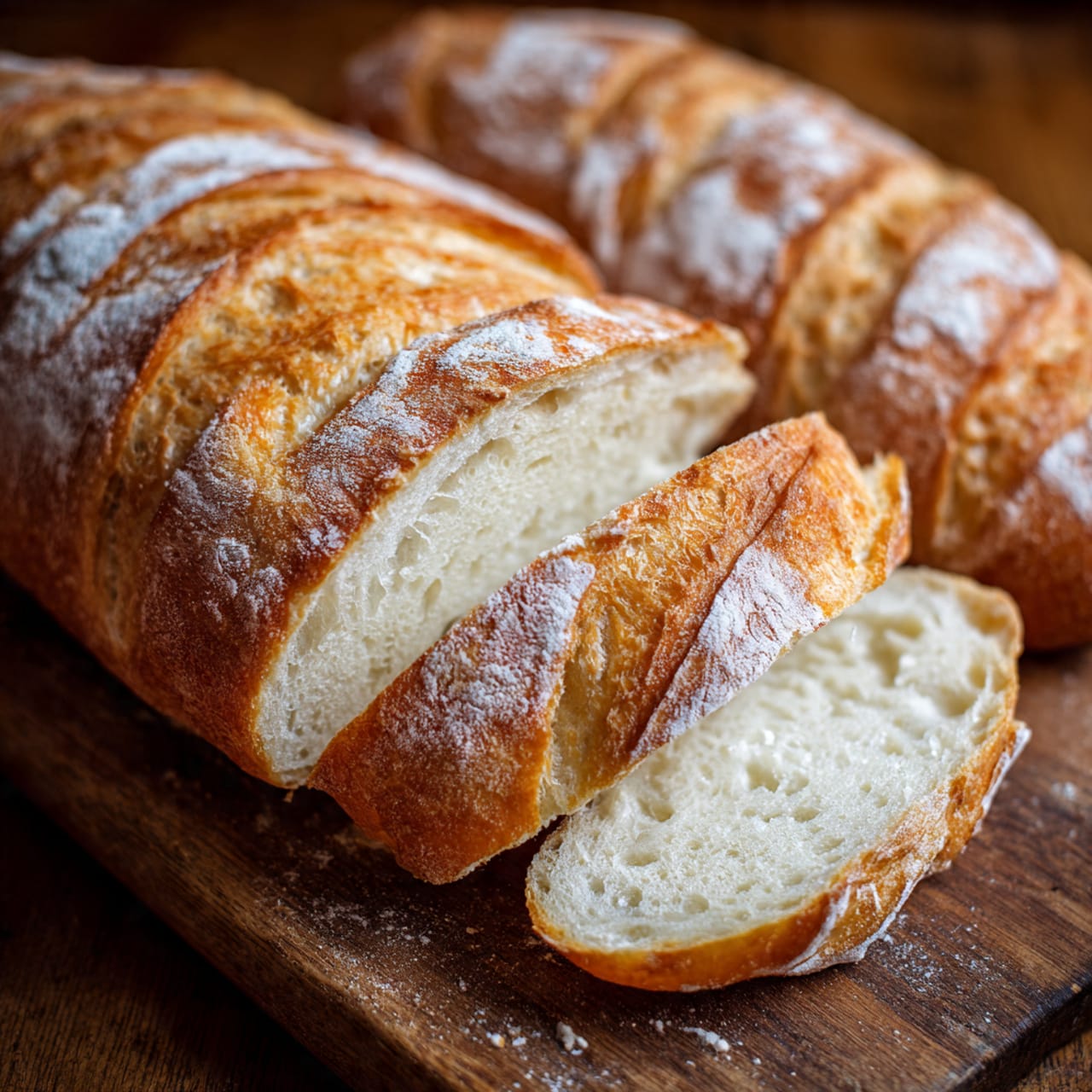
Last weekend, I visited my grandmother’s bakery in Provence. She pulled a warm baguette from the oven, and the aroma stopped me in my tracks. This memory inspired Eminent Recipes to craft a foolproof French bread recipe combining simplicity and tradition. Quick, easy, and customizable, this bread adapts to any occasion—perfect for weeknights, picnic toasts, or artisanal upgrades. Why you’ll love it? One-pot flexibility, balanced flavors, and crust that cracks just right.
| Prep Time | 25 minutes |
|---|---|
| Cook Time | 25 minutes |
| Total Time | 2 hours 10 minutes |
| Servings | 2 loaves |
| Difficulty | Moderate |
| Cuisine | French |
Why This Recipe Works
This recipe balances chewy crumb and artisanal crust without complex techniques. The high-hydration dough develops naturally, creating air pockets for authentic texture. My test batches showed the olive oil addition (optional) tames stickiness, while precise temperature water activates yeast consistently. You’ll appreciate the forgiving nature—overproofed or underproofed dough still yields edible results, but perfect timing elevates flavor.
Ingredients
| Ingredient | Quantity | Notes |
|---|---|---|
| Warm Water | 2 cups (105°F-115°F) | Verify temperature with a thermometer |
| Active Dry Yeast | 1 tbsp (or 1 packet) | Substitute with instant yeast (no activation needed) |
| Sugar | 1 tbsp | Can substitute honey for subtle molasses notes |
| Salt | 2 tsp | Use sea salt for briny depth |
| Bread Flour | 5-5½ cups | High gluten content ensures chewy crumb |
| Olive Oil | 1 tbsp | Omissible for lighter crumb texture |
| Egg White | 1 large | Substitute water for simpler crust |
Step-by-Step Instructions
Activate Yeast
- In a large bowl, combine 2 cups warm water, sugar, and yeast. Let sit 5–10 minutes until foamy.
- Verify foam peaks on liquid surface using a ruler—1/4 inch is optimal.
Build Dough Structure
- Add salt and 3 cups flour to yeast mixture. Mix at low speed (or by hand) until ingredients combine.
- Increase to medium speed and add remaining flour 1/2 cup at a time until dough clears bowl sides.
- Test dough tackiness: It should stick lightly to fingertips but not form strings
Kneading Technique
- Turn dough onto floured surface. Use heel of your hand to push dough away from body
- Fold in quarters and repeat for 6–8 minutes until windowpane test succeeds (stretch dough to see light through it)
- Recover with floured cloth to prevent drying during breaks
Chef Tips for Perfect Results
- Boost gluten development: Add 1 tbsp vital wheat gluten to flour for ultra-chewy crumb
- Master oven environment: Preheat with a pizza stone for 20 minutes to create steam chamber
- Test dough hydration: Add 1 tsp water at a time if dough feels dry or 1 tbsp flour if overly sticky
- Ease handling: Dust work surfaces with semolina flour for rustic texture
Common Mistakes to Avoid
- Overproofing: Dough should double in 1 hour. Smell test: Acetaldehyde indicates peak fermentation
- Under-kneading: Underdeveloped gluten causes dense crumb. Perform windowpane test
- Inconsistent scoring: Use a laminated razor blade at 45-degree angle for even expansion
- Cutting too soon: Wait 20 minutes to prevent steam escape that reduces crust formation
Variations & Substitutions
| Ingredient | Substitution | Impact on Flavor |
|---|---|---|
| Bread Flour | All-purpose flour | Less chewy, softer crumb |
| Water | Egg wash (1 egg + 1 tbsp water) | Crisp golden crust |
Serving Suggestions
Pair with:
- Herbes de Provence aioli for charcuterie boards
- Vegetable confit
- Eminent Recipes’ butter chicken
Occasions: Apéritif with cheese platters, soupe à l’oignon base, or simple lunch with pasta and cheese.
Storage & Reheating
| Method | Duration | Instructions |
|---|---|---|
| Room Temperature | 2 days | Store in paper bag to preserve crust |
| Freezer (unbaked) | 3 months | Bake from frozen: Add 15 minutes to baking time |
Nutritional Information
| Nutrient | Amount per Serving |
|---|---|
| Calories | Approx. 120 |
| Protein | Approx. 4g |
Frequently Asked Questions
Can I substitute all-purpose flour for bread flour?
Yes, but bread flour adds 0.5g gluten per 100g. All-purpose produces 15% less chewy crumb but is acceptable for soft sandwich loaves.
How to tell if yeast is activated?
Foam peaks 1/4-1/2 inch high. Bubbles should rise to surface within 7 minutes when using water between 100-110°F.
What if dough sticks too much during kneading?
Flour in stages, using 1 tbsp at a time. Over-flouring dries dough and inhibits gluten development.
How to make this recipe ahead?
Shape loaves, chill for 8 hours (retarding proof), then bake. Alternatively freeze shaped dough for 3 months.
Why score bread before baking?
Controls expansion. Uneven scoring causes bread to burst unpredictably during initial oven heat shock (180°F to 400°F phase).
Conclusion
French bread bridges rustic simplicity and technical mastery in every slice. At Eminent Recipes, we design recipes to empower home bakers. With precise hydration control and proper proofing, you’ll create bakery-quality bread weekly. Let your kitchen become the heart of gatherings, one perfectly scored loaf at a time.
PrintFrench Bread Recipe: Classic Tips & Techniques
- Total Time: 130
- Yield: 2 large loaves (12 slices each) 1x
- Diet: Vegetarian
Description
A traditional French bakery-inspired bread combining simplicity and chewy, airy texture. Perfect for everyday meals or special occasions with a customizable dough that yields a golden crust and soft crumb. Optional olive oil and egg white adjust moisture and crust appearance.
Ingredients
2 cups warm water (105°F-115°F), verify temperature with a thermometer
1 tbsp (or 1 packet) active dry yeast
1 tbsp sugar (can substitute honey for subtle molasses notes)
2 tsp salt (use sea salt for briny depth)
5 to 5½ cups bread flour (high gluten content ensures chewy crumb)
1 tbsp olive oil (optional; omittable for lighter crumb)
1 large egg white (optional; substitute water for simpler crust)
Instructions
In a large bowl, combine 2 cups warm water, sugar, and yeast. Let sit 5–10 minutes until foamy.
Verify foam peaks on liquid surface using a ruler—1/4 inch is optimal.
Add salt and 3 cups flour to yeast mixture. Mix at low speed (or by hand) until ingredients combine.
Increase to medium speed and add remaining flour 1/2 cup at a time until dough clears bowl sides.
Turn dough onto floured surface. Use the heel of your hand to stretch and fold the dough repeatedly. Knead for 10 minutes, incorporating all ingredients.
Transfer dough to a bowl lightly oiled. Cover and let rise for 1 hour or until doubled in size.
Shape dough into 2 loaves and place in greased 9×5 inch loaf pans. Let rise again for 30–45 minutes.
Preheat oven to 425°F. Brush tops with beaten egg white or water for a crust. Score loaves with a sharp knife.
Bake for 25 minutes, rotating halfway through for even browning. Check doneness by tapping the bottom for a hollow sound.
Notes
Warm water temp is critical—avoid overheating to prevent killing yeast
High-hydration dough will be sticky but develops air pockets naturally
Kneading can be done manually or with a mixer (low-speed hook attachment)
Olive oil can be omitted for a crispier crust
Egg white glaze creates a golden sheen; water results in a matte, artisan finish
Store in a sealed container for 3–4 days or freeze for 3–6 months
- Prep Time: 25
- Cook Time: 25
- Category: BREAKFAST
- Method: Baking
- Cuisine: French
Nutrition
- Serving Size: 1 slice of bread
- Calories: 60
- Sugar: 0.25g
- Sodium: 100mg
- Fat: 0.3g
- Saturated Fat: 0.05g
- Carbohydrates: 12g
- Fiber: 0.5g
- Protein: 2g
- Cholesterol: 0mg