
A Gingerbread Roll Cake offers a sophisticated blend of warm spices and creamy filling that defines a perfect holiday treat. This elegant sponge cake combines molasses and ginger with a silky cinnamon cream cheese frosting for a balanced finish. As a professional baker at Eminent Recipes, I developed this method to ensure a crack-free roll every time, making it an ideal centerpiece for any seasonal gathering or busy weeknight celebration.
Recipe Overview
| Prep Time | Cook Time | Total Time | Servings | Difficulty | Cuisine |
|---|---|---|---|---|---|
| 30 min | 12 min | 2 hr 30 min | 10 | Intermediate | Holiday/Baking |
Why This Recipe Works
This recipe succeeds because it prioritizes the structure of the sponge cake through precise egg separation techniques. By beating the egg whites separately, we create a light, airy crumb that remains flexible enough to roll without breaking, which is a common struggle with heavier gingerbread recipes.
You will appreciate how the sharpness of the ground ginger and cloves interacts with the tangy sweetness of the cream cheese filling. This balance prevents the cake from feeling too heavy or cloying, ensuring every slice provides a clean, spiced profile that pairs perfectly with warm beverages during cold winter evenings.
Ingredients
| Ingredient | Quantity | Notes |
|---|---|---|
| All-purpose flour | 120 g | Sift to ensure a fine crumb |
| Baking powder | 5 g | Check expiration for lift |
| Ground ginger | 6 g | Use fresh, potent spice |
| Ground cinnamon | 6 g | Divided for cake and filling |
| Ground cloves | 1 g | Adds deep earthy warmth |
| Ground nutmeg | 1 g | Provides subtle complexity |
| Fine salt | 4 g | Divided for flavor balance |
| Large eggs | 4 | Separated and room temp |
| Dark brown sugar | 100 g | Packed for moisture |
| Unsulphured molasses | 85 g | Do not use blackstrap |
| Unsalted butter | 87 g | Divided; melted and softened |
| Granulated sugar | 50 g | For the meringue base |
| Pure vanilla extract | 10 ml | Divided for depth |
| Powdered sugar | 215 g | Divided for dusting and filling |
| Full-fat cream cheese | 225 g | Softened for smooth texture |
| Crystallized ginger | 15 g | Optional garnish |
Step-by-Step Instructions
Sponge Preparation
- Preheat your oven to 175°C (350°F) and grease a 25 x 38 cm rimmed baking sheet before lining it with parchment paper and greasing the paper.
- Sift the flour, baking powder, ginger, cinnamon, cloves, nutmeg, and salt into a medium bowl to remove any lumps.
- Beat the egg yolks, brown sugar, molasses, melted butter, and 5 ml vanilla for 3 to 4 minutes until the mixture appears thick, glossy, and caramel-colored.
- Fold the dry ingredient mixture into the yolk base until just combined, keeping the batter thick but uniform.
- Beat the egg whites in a separate clean bowl to soft peaks before gradually adding the 50 g granulated sugar, beating until stiff and glossy.
- Fold one-third of the egg whites into the batter to lighten it, then gently fold in the remaining whites until no streaks remain.
Baking and Rolling
- Spread the batter evenly in your prepared pan and bake for 10 to 12 minutes, or until the top springs back when pressed lightly.
- Lay a smooth cotton towel on your counter, dust it with 20 g powdered sugar, and immediately invert the hot cake onto the towel.
- Peel off the parchment paper and roll the cake up tightly from the short end with the towel inside, allowing it to cool completely for 45 minutes.
Filling and Finishing
- Beat the softened cream cheese and 57 g butter for 2 minutes until perfectly smooth, then add the 180 g powdered sugar, vanilla, cinnamon, and salt.
- Unroll the cooled cake gently, spread the filling across the surface leaving a 2 cm border, and re-roll the cake without the towel.
- Chill the roll for at least 1 hour to set the shape, then dust with extra powdered sugar and garnish with crystallized ginger before slicing with a hot knife.
Chef Tips for Perfect Results
- Ensure your eggs are at room temperature before starting to achieve maximum volume in the meringue.
- Use a light-colored cotton towel for rolling to ensure no lint sticks to the delicate surface of the warm sponge.
- Dip your serrated knife into hot water and wipe it dry between every slice to achieve perfectly clean, professional-looking edges.
- Do not overbake the sponge, as a dry cake will crack immediately upon rolling regardless of your technique.
Common Mistakes to Avoid
- Overmixing the whites: This deflates the air bubbles and results in a dense, rubbery cake that refuses to roll correctly.
- Using the wrong molasses: Blackstrap molasses is too bitter and mineral-heavy for this delicate sponge, so always choose unsulphured variety.
- Rolling cold: You must roll the cake while it is still warm to set the memory of the shape, or it will fracture upon cooling.
- Skipping the chill time: The cream cheese filling needs to firm up in the refrigerator, or your slices will squish during plating.
Variations and Substitutions
| Ingredient | Substitution | Impact |
|---|---|---|
| Cinnamon | Pumpkin Spice | Adds floral notes of cardamom |
| Cream Cheese | Mascarpone | Creates a lighter, milkier flavor |
| Crystallized Ginger | Toasted Walnuts | Adds a crunchy texture contrast |
Serving Suggestions and Pairings
Serve this dessert with a dollop of unsweetened whipped cream or a warm spiced apple cider. It makes a stunning addition to holiday brunch tables or evening coffee socials. The vibrant ginger profile pairs exceptionally well with a dark roast coffee or a traditional masala chai tea.
Storage and Reheating
| Method | Duration | Instructions |
|---|---|---|
| Refrigerator | 3 days | Wrap tightly in plastic film |
| Freezer | 1 month | Slice and wrap individually |
Nutritional Information
Approximate values per serving:
| Nutrient | Amount |
|---|---|
| Calories | 310 kcal |
| Fat | 14 g |
| Carbohydrates | 42 g |
| Protein | 5 g |
Frequently Asked Questions
Can I substitute the cream cheese in this recipe?
You can substitute the cream cheese with mascarpone for a more decadent, less tangy flavor profile. Ensure the mascarpone is chilled when you begin to prevent it from becoming oily during the beating process.
How do I know when the gingerbread sponge is fully baked?
The sponge is fully baked when the surface springs back instantly when pressed with a fingertip. Overbaking creates a dry crust that will inevitably crack when you attempt to roll it.
What should I do if the cake cracks while rolling?
Small cracks are completely normal and will be easily hidden by the cream cheese filling and the final dusting of powdered sugar. If a large crack appears, simply use the filling as a glue to press the pieces back together before chilling.
Can I make this dessert one day in advance?
You can prepare this dessert one day in advance and store it in the refrigerator. In fact, resting the roll overnight often helps the flavors meld and the texture stabilize for cleaner slices.
What is the best way to slice the cake?
Use a long, thin, serrated knife dipped in hot water and wiped dry before each motion. This technique melts the outer layer of cream slightly, allowing for a clean cut through the soft sponge.
Mastering a Gingerbread Roll Cake allows you to showcase professional baking skills with accessible ingredients. By following these steps, you ensure a light, flexible sponge and a perfectly balanced filling every single time. Enjoy this festive creation with your loved ones and let the warm spices fill your kitchen with joy. Happy baking!
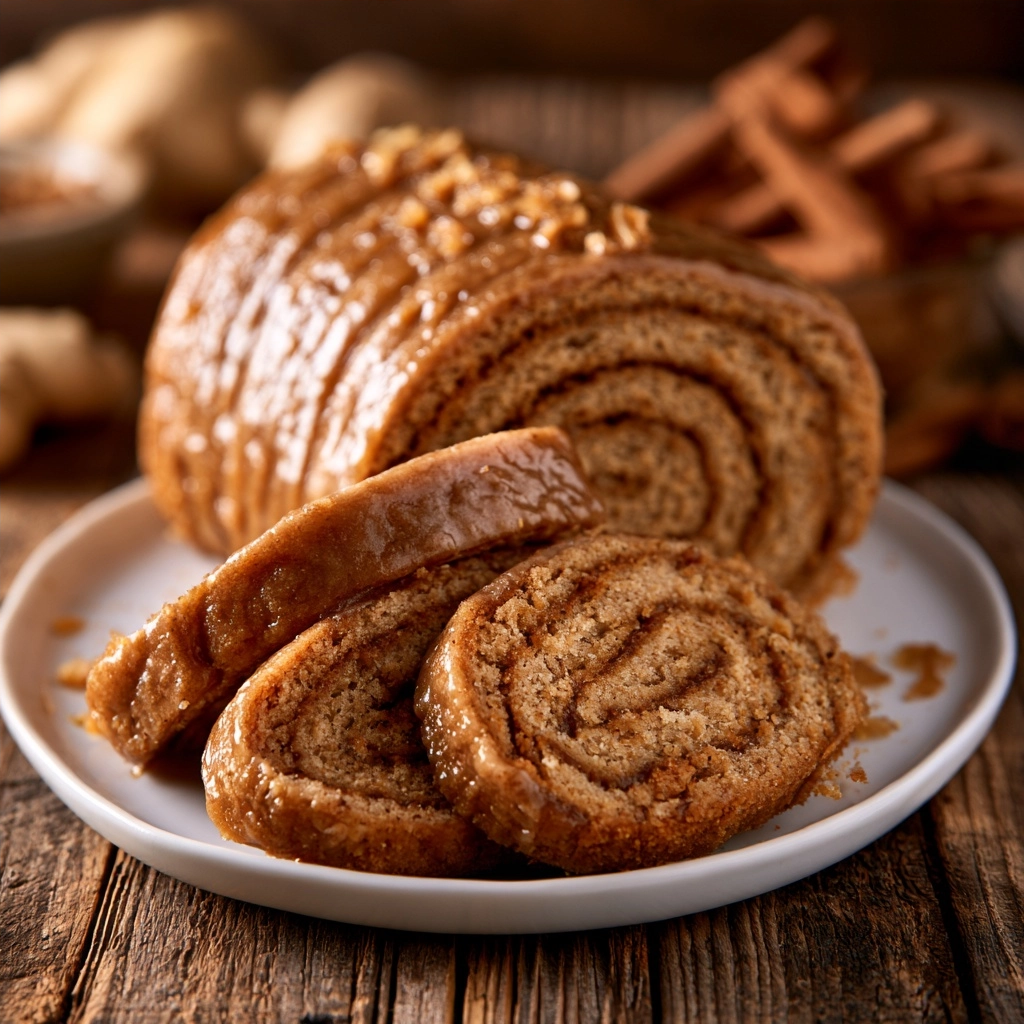
Gingerbread Roll Cake
Ingredients
Method
- Prep the pan. Preheat to 175°C (350°F) with a rack in the middle. Grease a 25 x 38 cm (10 x 15-inch) rimmed baking sheet, line it with parchment, and grease the parchment.
- Sift the dry ingredients. Sift the flour, baking powder, ginger, cinnamon, cloves, nutmeg, and salt together into a bowl.
- Beat the yolks. Beat the yolks, brown sugar, molasses, melted butter, and vanilla 3 to 4 minutes, until thick, glossy, and the color of dark caramel.
- Fold in the dry mix. Fold the sifted dry ingredients into the yolk mixture until just combined. The batter will be thick.
- Beat the whites. In a clean, dry bowl, beat the whites to soft peaks, about 2 minutes. Add the 50 g granulated sugar gradually and beat 2 to 3 minutes more, until stiff and glossy.
- Fold. Fold one-third of the whites into the batter to lighten it, then fold in the remaining whites in 2 additions. Stop when no streaks remain, since overmixing deflates the sponge.
- Bake. Spread evenly in the pan and bake 10 to 12 minutes, until the top springs back when pressed lightly. Overbaking makes the cake crack when rolled.
- Roll hot. Lay a smooth cotton towel on the counter and dust with the 20 g powdered sugar. Run a knife around the cake’s edges and invert it onto the towel. Peel off the parchment. Roll up from a short end with the towel inside, seam side down. Cool completely, about 45 minutes.
- Make the filling. Beat the cream cheese and butter 2 minutes, until smooth with no lumps. Add the powdered sugar, vanilla, cinnamon, and salt and beat 1 minute, until fluffy.
- Fill. Unroll the cake gently (small cracks are fine). Spread the filling evenly, leaving a 2 cm border on the far end. Re-roll without the towel and place seam side down on a platter.
- Chill. Wrap and chill at least 1 hour so the roll holds its shape for slicing.
- Finish. Dust with the 15 g powdered sugar, scatter the crystallized ginger, and trim the ends with a sharp knife dipped in hot water. Slice into 10 pieces.
Notes
- Make ahead: Bake, fill, and roll up to 1 day ahead, wrapped well in the fridge. Dust with powdered sugar just before serving.
- Cracks: Small cracks are normal and look rustic. Large cracks mean the cake was overbaked or cooled too long before rolling.
- Towel: Use a smooth cotton towel. A looped terry towel sticks to the sponge.
- Storage: Keeps 3 days in the fridge. Serve slightly cool, not ice cold.