
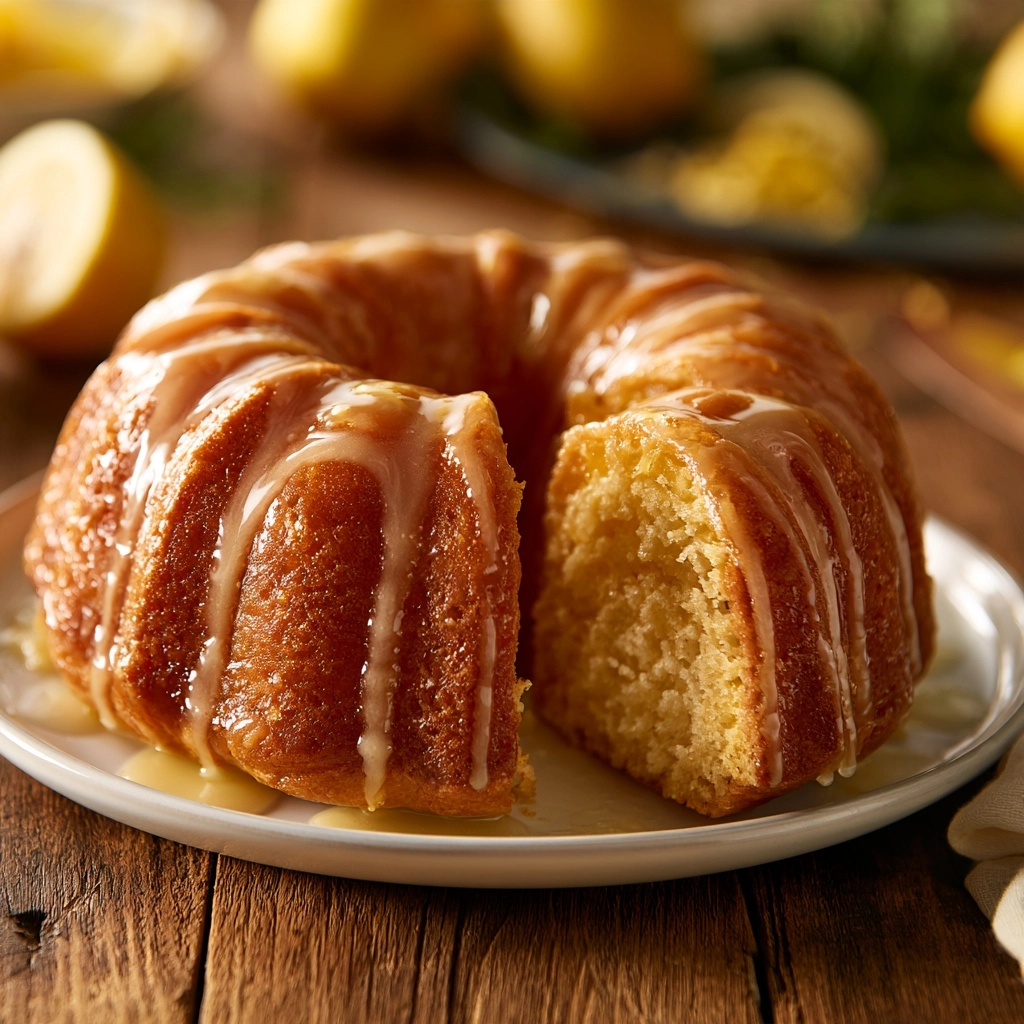
Lemon Bundt cake is a classic citrus-infused dessert that features a dense, moist crumb and a bright, tangy glaze. At Eminent Recipes, I prioritize dishes that balance sophisticated flavors with approachable techniques for home bakers. You will love this recipe because it produces a reliable, restaurant-quality result that is perfect for weekend gatherings or special occasions. This one-bowl method is easy to master and creates a centerpiece dessert that impresses every guest at your table.
Why This Recipe Works
This lemon Bundt cake succeeds because it relies on the technique of rubbing lemon zest directly into granulated sugar. This process releases citrus oils into the sugar crystals, ensuring that the bright, acidic profile of the lemon permeates the entire structure of the cake rather than just sitting on the surface. My experience with this recipe confirms that starting with room-temperature ingredients is the true secret to achieving a fine, tender crumb that holds up well during storage.
Beyond the texture, the addition of buttermilk provides a slight tang that complements the acidity of the fresh lemon juice. Because this recipe uses a traditional creaming method, the butter and sugar trap air that expands in the oven to produce a beautiful lift. It is a dependable staple that avoids the dryness often associated with citrus bakes by utilizing high-quality dairy and precise measuring techniques.
Recipe Overview
| Category | Details |
|---|---|
| Prep Time | 20 minutes |
| Cook Time | 60 minutes |
| Total Time | 1 hour 20 minutes |
| Servings | 12 |
| Difficulty | Easy |
| Cuisine | American Baking |
Ingredients
| Ingredient | Quantity | Notes |
|---|---|---|
| All-purpose flour | 330 g | Spoon and level to measure |
| Baking powder | 8 g | Ensure it is fresh |
| Fine salt | 3 g | Enhances sweetness |
| Unsalted butter | 226 g | Softened to room temperature |
| Granulated sugar | 300 g | White sugar works best |
| Lemon zest | 15 g | Zest from 3 fresh lemons |
| Large eggs | 4 units | Room temperature |
| Pure vanilla extract | 10 ml | High-quality extract |
| Buttermilk | 180 ml | Room temperature |
| Fresh lemon juice | 60 ml | Divided for batter and glaze |
| Powdered sugar | 180 g | Sifted for the glaze |
Step-by-Step Instructions
Pan Preparation and Oven Setup
- Place a rack in the lower third of the oven and preheat to 175°C (350°F).
- Grease every groove of the 12-cup Bundt pan with soft butter or baking spray with flour.
- Dust the pan with flour and tap out the excess to ensure the cake releases cleanly.
Batter Assembly
- Whisk the flour, baking powder, and salt in a medium bowl until fully combined.
- Rub the lemon zest into the sugar with your fingertips for 1 minute until fragrant and sandy.
- Beat the butter and lemon sugar on medium speed for 4 minutes until the mixture is pale and fluffy.
- Beat in the eggs one at a time, allowing 30 seconds of mixing for each addition.
- Stir the vanilla extract into the butter mixture.
- Mix the 60 ml lemon juice into the buttermilk to allow it to thicken.
- Add the flour mixture in 3 additions and the buttermilk mixture in 2 additions, starting and ending with the flour.
- Mix only until the last streak of flour disappears to avoid toughening the crumb.
Baking and Finishing
- Scrape the batter into the prepared pan and smooth the top with a spatula.
- Tap the pan twice on the counter to release any trapped air bubbles.
- Bake for 55 to 65 minutes until a wooden skewer comes out clean.
- Tent the top with foil at 40 minutes if the surface browns too quickly.
- Cool the cake in the pan for 15 minutes before inverting it onto a wire rack.
- Whisk the powdered sugar and 45 ml of lemon juice together until smooth.
- Drizzle the glaze over the completely cooled cake and let it set for 20 minutes before serving.
Chef Tips for Perfect Results
- Always use fresh lemons instead of bottled juice to ensure the purest flavor profile.
- Measure flour using the spoon-and-level method to prevent packing too much density into your batter.
- Tap your pan on the counter firmly to ensure the batter settles into the intricate details of the mold.
- Use a light-colored metal Bundt pan for even browning and to avoid burning the delicate crust.
- Let the cake cool for exactly 15 minutes in the pan to maintain its structural integrity during the flip.
Common Mistakes to Avoid
- Overmixing the batter: This creates excessive gluten, resulting in a rubbery cake rather than a soft, crumbly one.
- Using cold eggs: This can cause the butter emulsion to break, leading to a greasy or uneven texture.
- Skipping the sugar-zest rub: This step is essential to release essential oils; omitting it limits the lemon flavor depth.
- Glazing while warm: If the cake is still warm, the glaze will soak in and disappear instead of forming a beautiful, opaque shell.
Variations and Substitutions
| Ingredient | Substitution | Impact |
|---|---|---|
| Buttermilk | Yogurt mixed with milk | Provides a similar tang and thickness |
| Lemon juice | Orange juice | Sweeter, less acidic finish |
| Vanilla extract | Almond extract | Adds a nutty undertone |
Serving Suggestions and Pairings
Serve this lemon Bundt cake alongside a cup of hot Earl Grey tea or a fresh fruit salad for a balanced brunch. It pairs exceptionally well with a dollop of unsweetened whipped cream or fresh berries like raspberries and blackberries. For a festive occasion, garnish the top with candied lemon slices or a dusting of extra powdered sugar.
Storage and Reheating
| Method | Duration | Instructions |
|---|---|---|
| Room Temperature | 2-3 days | Keep in an airtight container |
| Refrigerator | 5-7 days | Wrap tightly in plastic wrap |
| Freezer | 3 months | Freeze without glaze and thaw on the counter |
Nutritional Information
Approximate values per serving (1 slice).
| Nutrient | Amount per Serving |
|---|---|
| Calories | 310 kcal |
| Fat | 14 g |
| Carbohydrates | 42 g |
| Protein | 4 g |
| Sugar | 28 g |
Frequently Asked Questions
Can I substitute buttermilk if I do not have any in the fridge?
You can create a simple buttermilk substitute by mixing 180 ml of whole milk with one tablespoon of white vinegar or lemon juice. Allow this mixture to sit for five minutes before using it in the recipe. This provides the necessary acidity for the baking powder to activate properly.
How do I know when the cake is finished baking?
The cake is finished when a skewer inserted into the thickest part comes out clean or with only a few moist crumbs. Ensure you test a few different spots, avoiding the hole in the center, to guarantee even baking throughout. Avoid relying solely on time as ovens vary in temperature calibration.
Why did my cake stick to the pan?
The cake sticks when the pan is not properly greased or if the cake is turned out before it has cooled for at least 15 minutes. Ensure you reach every nook and cranny of the Bundt pan with butter and a light dusting of flour. A high-quality baking spray with added flour is another reliable solution for intricate pans.
Can I make this cake ahead of time?
You can bake the cake a day in advance, as the flavors often improve as they rest. Simply wrap the cooled, unglazed cake tightly in plastic wrap and store it at room temperature. Glaze the cake shortly before serving to maintain the best appearance and texture.
What is the best way to glaze the cake?
Place a piece of parchment paper underneath your wire cooling rack to catch any excess glaze drips. Use a spoon to slowly drizzle the glaze over the top, allowing it to pool in the grooves of the Bundt cake. Let the glaze set for at least 20 minutes before attempting to move or slice the cake.
Conclusion
This lemon Bundt cake provides a bright, refreshing finish to any meal and is a reliable choice for bakers of all skill levels. By focusing on quality ingredients and following the simple creaming method, you ensure a cake that remains moist and flavorful for days. Enjoy the vibrant citrus notes in every bite and share this delightful dessert with friends and family. Your kitchen will smell wonderful, and the final product is certain to satisfy any craving for a classic, homemade treat that highlights pure, zesty flavor.
Lemon Bundt Cake
Ingredients
Method
- Prep the pan. Place a rack in the lower third and preheat to 175°C (350°F). Grease every groove of the Bundt pan with soft butter or baking spray with flour, then dust with flour and tap out the excess.
- Mix the dry ingredients. Whisk the flour, baking powder, and salt.
- Scent the sugar. Rub the zest into the sugar with your fingertips for 1 minute, until fragrant and like damp sand.
- Cream. Beat the butter and lemon sugar on medium speed 4 minutes, until very pale and fluffy. Scrape the bowl once.
- Add the eggs. Beat in the eggs one at a time, 30 seconds each, then the vanilla.
- Mix the liquids. Stir the 60 ml lemon juice into the buttermilk. It thickens slightly, which is normal.
- Alternate. On low speed, add the flour mixture in 3 additions and the buttermilk mixture in 2, starting and ending with flour. Mix just until no dry streaks remain.
- Fill. Scrape the batter into the pan, smooth the top, and tap the pan twice on the counter to release air.
- Bake. Bake 55 to 65 minutes, until a skewer in the thickest part comes out clean. If the top is dark at 40 minutes, tent with foil.
- Cool. Cool 15 minutes in the pan, then invert onto a rack and cool completely, about 1 hour.
- Glaze. Whisk the powdered sugar and 45 ml lemon juice until thick but pourable. Drizzle over the cooled cake and let it set 20 minutes.
Notes
- Lemons: You need 3 large lemons. Zest all of them first, then juice them (about 135 ml, and the recipe uses 105 ml).
- Swap: Add 15 g poppy seeds with the dry ingredients, or use orange zest and juice.
- Tip: Cool completely before glazing, or the glaze runs off and turns thin.
- Storage: Keeps 4 days covered at room temperature, or 3 months in the freezer, unglazed.