
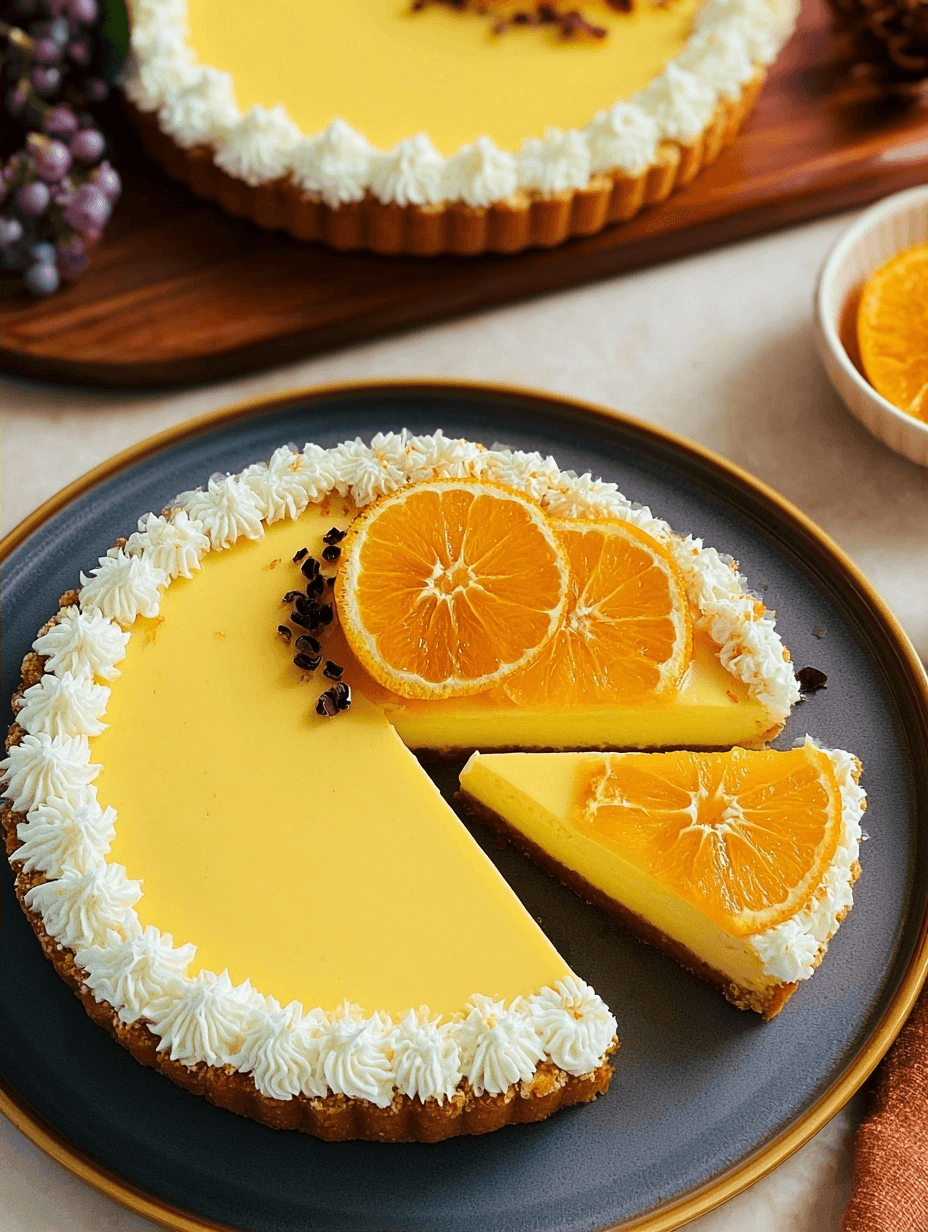
Orange tart is a classic French-inspired pastry featuring a buttery, crisp crust filled with a silky, vibrant citrus custard. My journey with this dessert began in a small neighborhood bakery where the scent of fresh orange zest filled the air during winter months. At Eminent Recipes, I prioritize dishes that balance sophisticated presentation with ease of preparation. This recipe delivers a bright, refreshing finish to any meal, whether hosting a formal dinner or seeking a weekend culinary project.
Recipe Overview
| Prep Time | 30 minutes |
|---|---|
| Cook Time | 45 minutes |
| Total Time | 3 hours 45 minutes |
| Servings | 8 servings |
| Difficulty | Intermediate |
| Cuisine | French-inspired |
Why This Recipe Works
This recipe achieves the perfect balance of sweetness and acidity by combining fresh navel orange juice with a touch of lemon. The acidity helps cut through the richness of the butter in the crust, creating a harmonious bite that feels light on the palate. I have refined this balance over years of testing to ensure the citrus profile remains bold and distinct rather than overly sugary.
You will appreciate this recipe for its versatility and clear, repeatable results. It serves as a reliable showstopper for gatherings without requiring professional pastry training. Because the custard sets beautifully in the refrigerator, you can finish your preparations well before guests arrive. This approach minimizes stress while maximizing the visual impact of your dessert table.
Ingredients
| Ingredient | Quantity | Notes |
|---|---|---|
| Pate sucree | 1 recipe | Use chilled homemade dough |
| Large eggs | 4 units | Room temperature |
| Large egg yolks | 2 units | Grade A large |
| Granulated sugar | 1 cup | Fine grain dissolves best |
| Salt | 1/4 teaspoon | Sea salt fine grain |
| Navel orange juice | 1 cup | Freshly squeezed only |
| Lemon juice | 1/3 cup | Freshly squeezed only |
| Butter | 1/2 cup | Cut into small cubes |
| Orange zest | 2 units | Zest finely grated |
Step-by-Step Instructions
Preparing the Crust
- Preheat your oven to 350°F and line your 10-inch tart pan with the rolled pate sucree.
- Prick the bottom of the raw dough thoroughly with a skewer and place the pan in the refrigerator for 20 minutes to firm up.
- Line the chilled crust with parchment paper, fill with pie weights, and bake for 20 minutes before removing the weights.
- Continue baking for 10 additional minutes until the bottom reaches a pale golden color, then lower your oven heat to 325°F.
Creating the Citrus Filling
- Place a fine mesh sieve over a medium heatproof bowl near your stove to prepare for straining.
- Whisk the eggs, yolks, sugar, and salt together in a large saucepan until the mixture is fully combined and smooth.
- Stir in the fresh orange and lemon juices using a whisk to ensure the custard base is uniform in color.
- Cook the mixture over medium-low heat while stirring constantly with a silicone spatula for 6 to 8 minutes.
- Remove from heat once the custard thickens enough to coat the back of a spoon and immediately pass it through your sieve.
- Incorporate the butter and orange zest into the warm custard, stirring until the butter has completely melted into the mixture.
- Pour the finished filling into the pre-baked tart shell carefully to avoid overflow.
- Bake the tart on a rimmed baking sheet for 35 to 45 minutes until the edges are set and the center retains a slight jiggle.
- Cool at room temperature for one hour before transferring to the refrigerator for at least three hours to set completely.
Chef Tips for Perfect Results
- Use only freshly squeezed juice to ensure the purest flavor profile; bottled juices often contain additives that alter the texture.
- Ensure the butter is softened but not melted before adding it to the warm custard to achieve a smooth mouthfeel.
- Always strain the custard through a fine-mesh sieve to remove any accidental bits of cooked egg or zest clumps.
- Bake the tart on a sturdy rimmed baking sheet to keep the tart pan stable and catch any potential spills.
Common Mistakes to Avoid
- Overcooking the custard: Doing this causes the eggs to scramble, resulting in a grainy rather than silky texture.
- Using cold eggs: Always bring your eggs to room temperature to ensure they emulsify properly with the sugar and juices.
- Skipping the chilling time: If you rush the cooling process, the tart will not slice cleanly and may collapse on the plate.
- Ignoring the rimmed baking sheet: Placing the tart directly on oven racks increases the risk of spilled filling and difficult cleaning.
Variations and Substitutions
| Ingredient | Substitution | Impact on Flavor |
|---|---|---|
| Navel orange | Blood orange | Deepens crimson color and adds floral notes |
| Lemon juice | Lime juice | Makes the tart more tart and zesty |
| Granulated sugar | Caster sugar | Dissolves faster for a smoother custard |
Serving Suggestions and Pairings
Serve this tart with a side of unsweetened whipped cream to contrast the intense citrus custard. It pairs excellently with a cup of hot Earl Grey tea or a light herbal infusions during afternoon gatherings. For special holiday dinners, garnish the plates with fresh mint leaves and thin ribbons of candied orange peel to add color and texture.
Storage and Reheating
| Method | Duration | Instructions |
|---|---|---|
| Refrigerator | 2 Days | Keep in an airtight container |
| Freezer | Not Recommended | Custard texture may separate |
Nutritional Information
| Nutrient | Amount per Serving |
|---|---|
| Calories | 320 kcal |
| Total Fat | 14g |
| Carbohydrates | 42g |
| Sugar | 28g |
| Protein | 5g |
Values are approximate. Consult Nutrition.gov for detailed dietary tracking.
Frequently Asked Questions
Can I make this orange tart gluten-free?
Yes, you can substitute the standard pate sucree with a gluten-free flour blend specifically designed for pastries. Ensure your chosen blend contains xanthan gum to provide the necessary structure for the crust.
How do I know when the custard is finished baking?
The custard is finished when the edges of the tart look firm and slightly puffed, while the center still shows a gentle wiggle when moved. The filling will solidify completely into a stable, sliceable consistency once it is fully chilled.
Why did my tart crust become soggy?
A soggy crust usually results from under-baking the dough during the initial blind-baking stage or adding a warm filling to a warm crust. Always ensure the bottom is golden brown before adding the custard and let the crust cool partially.
Can I prepare the crust ahead of time?
You can bake the crust up to 24 hours in advance and store it in an airtight container at room temperature. This makes assembly significantly quicker on the day you plan to serve the dessert.
What is the best way to slice this tart?
Use a long, sharp knife dipped in hot water and wiped dry before each cut to ensure clean edges. This prevents the filling from dragging across the crust when you apply pressure.
Mastering this orange tart brings a professional touch to any home kitchen. The combination of bright, citrusy custard and rich, buttery pastry creates a memorable conclusion to your dining experience. Explore more kitchen techniques at Food Network for further inspiration on perfecting fruit-based desserts. Remember that high-quality ingredients are the foundation of great baking, so enjoy the process of gathering the freshest citrus you can find.
Print
Vibrant Orange Tart
- Total Time: 225
- Yield: 8 servings 1x
- Diet: Vegetarian
Description
Indulge in a classic French-inspired orange tart that perfectly balances a buttery, crisp pastry crust with a bright, silky citrus custard. This elegant dessert combines fresh navel orange juice and a touch of lemon for a sophisticated, zesty finish. Ideal for formal dinners or weekend gatherings, this recipe is designed to be approachable yet visually stunning, ensuring a reliable and refreshing centerpiece for your dessert table.
Ingredients
1 recipe pate sucree (chilled homemade dough)
4 large eggs, room temperature
2 large egg yolks
1 cup granulated sugar
1/4 teaspoon fine sea salt
1 cup fresh navel orange juice
1/3 cup fresh lemon juice
1/2 cup butter, cut into small cubes
2 units orange zest, finely grated
Instructions
Preheat your oven to 350°F and line your 10-inch tart pan with the rolled pate sucree.
Prick the bottom of the raw dough thoroughly with a skewer and chill for 20 minutes.
Line the crust with parchment paper and fill with pie weights; bake for 20 minutes.
Remove the weights and bake for 10 additional minutes until golden.
In a saucepan, whisk together eggs, yolks, sugar, salt, orange juice, and lemon juice over medium heat.
Cook while whisking continuously until the mixture thickens and coats the back of a spoon.
Remove from heat and whisk in the butter and zest until smooth and emulsified.
Pour the custard into the pre-baked crust and spread evenly.
Bake the tart for another 15 minutes to set the custard.
Cool completely before refrigerating for at least 2 hours until firm.
Notes
Ensure all citrus is freshly squeezed for the best flavor. The tart can be made ahead of time and stored in the refrigerator, making it perfect for hosting. Ensure the custard is fully cooled and set before cutting for clean slices.
- Prep Time: 30
- Cook Time: 45
- Category: Baking
- Method: Baking
- Cuisine: French-inspired
Nutrition
- Serving Size: 1 slice
- Calories: 320
- Sugar: 28g
- Sodium: 150mg
- Fat: 14g
- Saturated Fat: 8g
- Carbohydrates: 42g
- Fiber: 1g
- Protein: 6g
- Cholesterol: 115mg