
A Tarte Tatin recipe creates a sophisticated French upside-down pastry featuring caramelized apples tucked under a crisp, buttery puff pastry crust. This timeless dessert delivers a harmonious balance of deep caramel notes and tender fruit textures in every bite. At Eminent Recipes, we specialize in perfecting these classic techniques to ensure your kitchen produces restaurant-quality results every single time. You will appreciate this dish for its quick preparation and its ability to turn simple pantry staples into a show-stopping finish for any dinner party.
Recipe Overview
| Prep Time | 16 min |
|---|---|
| Cook Time | 45 min |
| Total Time | 61 min |
| Servings | 6-8 servings |
| Difficulty | Intermediate |
| Cuisine | French |
Why This Recipe Works
This Tarte Tatin recipe works because it relies on the science of caramelization to build complex flavor layers. By melting sugar into an amber syrup before adding butter, we create a rich base that clings perfectly to the fruit during the baking process.
I personally love how versatile this dessert remains throughout the year. Whether you are hosting a formal gathering or looking for a comforting treat on a busy weeknight, the balance of warm cinnamon and crisp, flaky pastry provides consistent satisfaction for both guests and family alike.
Ingredients
| Ingredient | Quantity | Notes |
|---|---|---|
| Firm Apples | 1 kg | Granny Smith or Honeycrisp |
| Granulated Sugar | 150 g | White superfine works best |
| Unsalted Butter | 80 g | Cold, cubed |
| Vanilla Extract | 5 ml | Pure extract preferred |
| Lemon Juice | 15 ml | Freshly squeezed |
| Ground Cinnamon | 2 g | Ceylon variety |
| Salt | 1 g | Fine sea salt |
| Puff Pastry | 250 g | Ready-made, thawed |
| Flour | 10 g | For dusting |
Equipment
- Ovenproof skillet (cast iron or heavy-bottomed stainless steel)
- Sharp paring knife
- Heatproof silicone spatula
- Pastry brush
- Large serving plate
Step-by-Step Instructions
Preparation Phase
- Peel, core, and halve the apples, then toss them thoroughly with lemon juice and ground cinnamon in a large mixing bowl.
- Roll the thawed puff pastry on a lightly floured surface into a circle that is approximately two inches larger than your skillet diameter.
Caramelization and Assembly
- Sprinkle the sugar evenly across the base of your ovenproof skillet and place over medium heat, allowing it to transform into an amber-colored caramel without manual stirring.
- Incorporate the butter and vanilla extract into the hot caramel, stirring gently with a heatproof spatula until the mixture appears smooth and well-combined.
- Arrange the apple halves in a tight, circular pattern within the skillet, ensuring they are packed snugly to prevent large gaps during the baking phase.
- Simmer the apples gently for 10 to 12 minutes to release their natural juices and begin the softening process before moving to the oven.
Baking and Serving
- Drape the prepared puff pastry over the apples, tucking the edges firmly down the sides of the skillet to create a seal, and prick the surface with a fork to allow steam escape.
- Bake the assembly at 190°C for 25 to 30 minutes until the pastry crust reaches a deep golden brown color.
- Allow the skillet to rest for 5 minutes before carefully inverting it onto your serving platter using heat-resistant gloves.
Chef Tips for Perfect Results
- Use firm apple varieties like Granny Smith to ensure the fruit maintains its structural integrity during the high-heat baking process.
- Ensure the pastry stays chilled until the very last moment to achieve maximum puffiness and distinct buttery layers.
- Keep a firm grip on your skillet handles using thick oven mitts when inverting, as the caramel remains extremely hot and liquid.
- Always monitor the sugar during the initial melting phase to prevent bitterness from burning, aiming for a consistent medium-amber hue.
Common Mistakes to Avoid
- Over-stirring the caramel: This causes the sugar to crystallize and creates a grainy texture rather than a smooth, glassy finish.
- Inverting too quickly: Waiting less than 5 minutes makes the caramel runny and unstable, which often leads to the fruit sliding out of place.
- Using room-temperature pastry: Warm dough loses its ability to rise effectively, resulting in a dense and heavy crust.
- Choosing soft apples: Varieties like Golden Delicious turn into applesauce under the heat, ruining the beautiful presentation of the fruit halves.
Variations and Substitutions
| Ingredient | Substitution | Impact on Flavor |
|---|---|---|
| Sugar | Light Brown Sugar | Adds a deep molasses profile |
| Cinnamon | Cardamom | Provides an exotic, floral note |
| Vanilla Extract | Almond Extract | Creates a nutty, aromatic finish |
Serving Suggestions and Pairings
Serve your Tarte Tatin warm to highlight the contrast between the hot, gooey caramel apples and the cold cream accompaniment. A scoop of high-quality vanilla bean ice cream or a dollop of freshly whipped unsweetened cream provides the ideal textural balance. This dessert pairs beautifully with a hot cup of black tea or a dark roast coffee after a hearty dinner meal.
Storage and Reheating
| Method | Duration | Instructions |
|---|---|---|
| Room Temp | 1 day | Keep covered in a cool, dry area |
| Refrigerator | 3 days | Store in an airtight container |
| Reheating | 10 min | Bake at 170°C until crust crisps |
Nutritional Information
Approximate values per serving.
| Nutrient | Amount |
|---|---|
| Calories | 340 kcal |
| Fat | 18 g |
| Carbohydrates | 42 g |
| Protein | 3 g |
Frequently Asked Questions
Can I substitute the puff pastry with pie crust?
You can use a standard shortcrust pastry if you prefer a crunchier, cookie-like texture rather than the airy layers of puff pastry. Note that shortcrust will be less forgiving during the inversion process.
How do I know when the apples are done?
The apples are finished when they appear soft and translucent, typically showing a slight indentation when tested with the tip of a paring knife. Ensure they remain firm enough to hold their shape during the flip.
What should I do if the caramel burns?
Burnt caramel becomes bitter and unusable, requiring you to discard the batch and start again to ensure the flavor remains sweet and balanced. Always use a clean skillet to prevent off-flavors from residual burnt sugar.
Can I make this dessert ahead of time?
You can prepare the apple and sugar base several hours early, but you should bake the pastry only when you are ready to serve. Freshly baked crust ensures the best experience for your guests.
Why is my Tarte Tatin soggy after baking?
Excessive moisture from the apples often leads to a soggy crust if you do not allow enough steam to escape through the fork-pricked holes. Ensure your skillet is not overcrowded and allow adequate air circulation during the final baking stage.
Conclusion
Mastering this Tarte Tatin recipe is a rewarding endeavor that brings a professional French pastry into your home kitchen. By following the precise steps for caramelization and proper fruit selection, you create a dessert that is as beautiful as it is delicious. We hope this guide helps you feel confident in your baking journey. Enjoy the rich, caramelized warmth of your homemade creation with friends and family, and remember that practice makes every batch even better than the last.
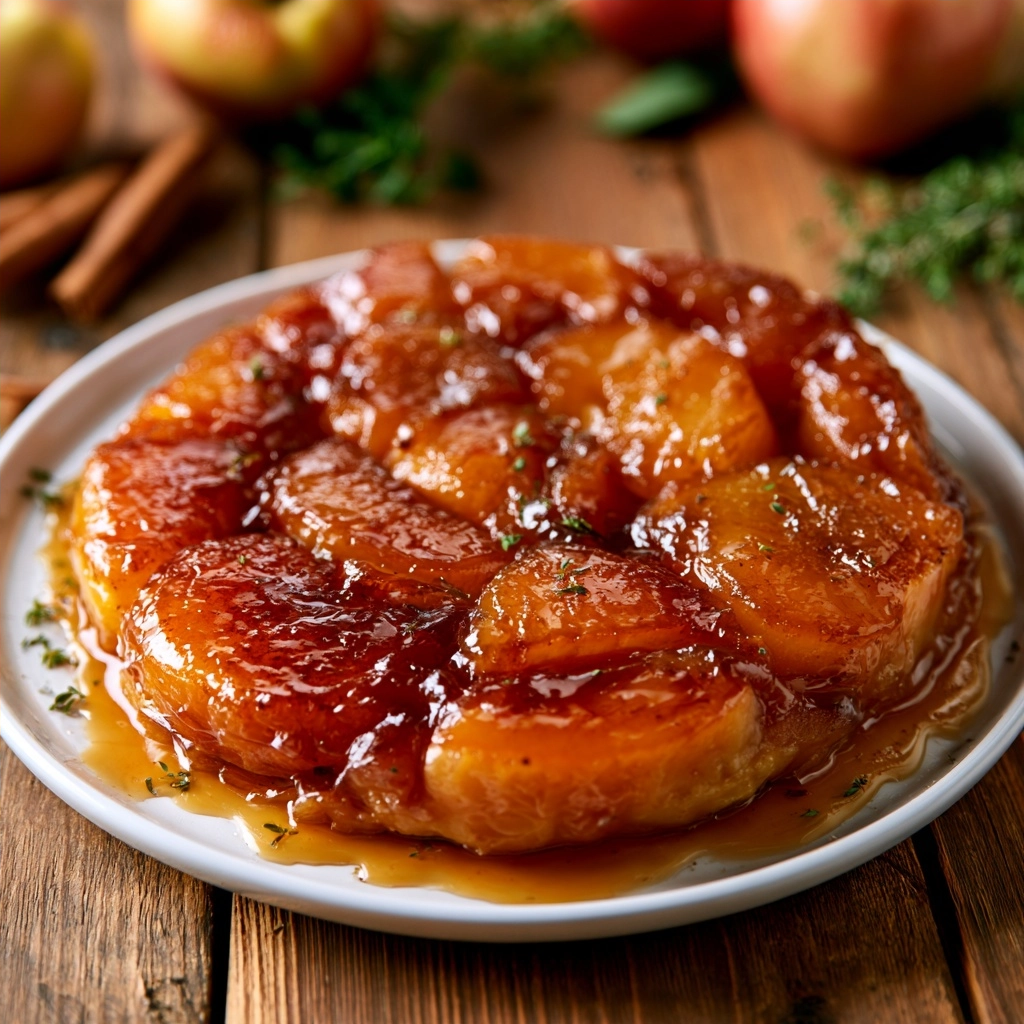
Classic French Tarte Tatin
Ingredients
Method
- Preheat oven to 200°C (400°F).
- Peel, core, and halve the apples, then toss in a bowl with lemon juice and cinnamon.
- Roll the puff pastry on a floured surface into a circle two inches larger than your skillet.
- Sprinkle sugar evenly in an ovenproof skillet over medium heat until it melts into an amber caramel.
- Stir in the butter, vanilla, and salt until smooth.
- Arrange the apple halves tightly in the skillet, cut side up, over the caramel.
- Cook for 10-12 minutes until the apples are partially soft.
- Place the puff pastry circle over the apples, tucking the edges down into the skillet.
- Cut a few small slits in the pastry to vent steam.
- Bake for 25-30 minutes until the pastry is deep golden brown and crisp.
- Remove from oven and let rest for 5 minutes before carefully inverting onto a large plate.